
Who this guide is for
- Owners or investors evaluating an industrial unit for a possible indoor sports use
- Sports clubs and community groups exploring a permanent training or match home
- Schools and academies considering an off-site or adjacent sports space
- Municipalities and public bodies scoping community leisure provision
- Property developers and asset managers assessing repurposing options for a vacant shell
- Project managers and facility managers preparing briefs and professional-engagement questions
Planning diagram
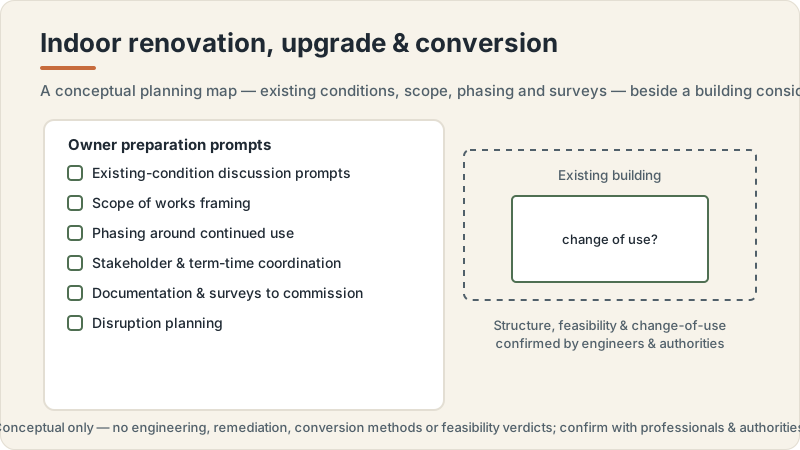
Indoor renovation, upgrade and conversion concept
Conceptual editorial diagram — not a construction drawing, specification, to-scale plan or proof of a real project. It is not engineering, structural, fire/life-safety, crowd-safety or accessibility-compliance guidance. Capacities, dimensions, standards, requirements and costs vary by facility type, audience, site, use case and governing body, and are confirmed with qualified professionals, relevant authorities and governing bodies. Build Design Hub does not design, build, inspect, certify, recommend or match anyone.
What this guide helps you prepare
This guide helps you organise your thinking before you spend money on surveys, professional fees or a lease commitment. A warehouse is designed and permitted for storage or industrial activity, not sport, so almost every assumption you might carry into the building deserves to be reframed as a question for a qualified professional or the relevant authority. The aim here is to help you capture what you actually know about the unit, identify the gaps, and structure those gaps into questions you can put to a surveyor, an architect, a structural engineer, a building-services engineer and the local authority. It does not tell you whether a conversion is possible, permitted or advisable; those are professional and regulatory determinations.
By preparing a clear project brief and a well-ordered set of questions, you make each professional conversation more productive and easier to compare against another. This matters when you are gathering quotes or scoping fees, because vague briefs produce vague and non-comparable responses. Nothing in this guide should be treated as a requirement, threshold, dimension, capacity or cost. Where the topic is a building system such as ventilation, lighting or acoustics, the guide stays deliberately at the level of what to ask and what documentation to request, never system design, sizing or compliance claims.
- Write down the intended sporting uses and who is expected to use the space, keeping demand assumptions as questions to test, not facts
- List everything you currently know about the building from marketing particulars, and mark each item 'to be confirmed by a professional'
- Separate what is an owner or client decision from what is a professional or authority determination
- Note which topics touch change of use, structure, or building systems so they can be routed to the right specialist
- Prepare a folder for documents you will request rather than assume, such as existing drawings, surveys and use history
- Frame every requirement-style question with 'what should I confirm, with whom, and against which governing body or authority'
Understanding the existing warehouse shell
Before a sporting use can be discussed, the existing building needs to be understood on its own terms, and that understanding comes from professionals, not from a walk-through or a floor plan. An industrial shell carries a history of loading, alteration, wear and servicing that is rarely visible to a non-specialist. Questions about the frame, the roof, the floor slab, the cladding, drainage, existing services and the condition of all of these belong to surveyors and engineers who can inspect, test and document. Your role in preparation is to assemble whatever records exist and to list the uncertainties, so that the right professional can be asked the right question rather than being handed an open-ended 'is this building any good'.
It also helps to be honest about what you do not have. Many industrial units come with incomplete drawings, unknown alteration histories or no record of how the floor was constructed or what the roof supports. Rather than filling those gaps with assumptions, note them as explicit questions. A structural engineer may need to establish what the existing structure can and cannot accommodate; a building surveyor may need to assess condition and defects; a services engineer may need to review existing electrical, drainage and ventilation provision. None of these can be pre-judged from particulars, and this guide does not attempt to.
- What existing drawings, structural records, and alteration or building-control history exist, and what is missing
- What is the current permitted use of the unit, and how is that evidenced
- What condition surveys or investigations would a professional advise before any decision is made
- What is known and unknown about the floor slab, frame, roof and cladding, all to be assessed by a qualified professional
- What existing services (power, water, drainage, heating, ventilation) are present, and who should verify their condition and capacity
- What features of an industrial building might a professional flag as needing further investigation for a different use
Turning the intended sporting use into questions, not conclusions
The other half of a conversion is the intended use, and it is tempting to assume that because a hall looks large it will suit a chosen sport. Resist that. Whether a space suits basketball, five-a-side, gymnastics, racquet sports, a climbing wall, a fitness gym or a flexible multi-purpose hall depends on requirements set by governing bodies, authorities and qualified professionals, and those requirements are not things this guide can state. Instead, prepare the questions: which governing body or standard applies to your intended activity, who confirms whether the building can meet it, and what documentation would demonstrate that. Keep dimensions, run-offs, capacities, surface types and system performance as open questions routed to the appropriate professional or body.
Different uses also place different, and sometimes competing, demands on the same shell, so it helps to prioritise your intended activities and note where flexibility matters to you. A multi-purpose hall serving several sports and a single-sport facility raise different questions for professionals and authorities. Capturing your priorities and constraints in the brief, while explicitly leaving the technical determinations to specialists, gives architects and engineers something concrete to respond to. It also lets you compare professional advice consistently, because you are asking each of them about the same clearly stated intentions rather than a shifting idea.
- Which sports or activities are intended, in priority order, and which governing bodies or standards each may fall under
- Who confirms whether a building can accommodate a given sporting use, and what evidence they would need
- What questions to ask about surfaces, layout, ancillary spaces and support rooms, kept as questions not specifications
- How flexibility between multiple uses might change what professionals and authorities need to assess
- What spectator, changing, storage, reception or support functions are envisaged, to be sized and specified only by professionals
- How to record use-demand assumptions as items to test rather than facts to design around
Planning questions before speaking with professionals
Good preparation means arriving at professional meetings with your own house in order. Before you brief a surveyor, architect or engineer, work through the questions you can answer yourself: what you want the facility to do, who the stakeholders are, what decisions sit with you, what your constraints are, and what documents you can supply. This front-loading reduces wasted fee time and helps professionals give you focused advice. It also surfaces internal disagreements early, when a club committee, a school leadership team or a development board still has room to align on priorities before external costs mount.
It is equally important to identify what you must not decide yourself. Deciding on a change of use, a structural approach, a ventilation or lighting scheme, an acoustic strategy, a fire or accessibility position, or whether the project is feasible are not owner decisions; they are professional and regulatory determinations. Preparing this way keeps you on the right side of that line and keeps this guide firmly educational. The questions below are prompts for your own planning, not for a professional to answer, and they should feed into a brief you can hand over cleanly.
- Have we written a clear project brief that states intended uses, stakeholders and known constraints without stating technical requirements as facts
- Have we distinguished owner or client decisions from professional and authority determinations
- Have we gathered all available drawings, surveys, use history and lease or ownership information to share
- Have we listed our open questions and uncertainties rather than guessing at answers
- Have we agreed internally on priorities so professionals receive one consistent brief
- Have we set aside the temptation to assume dimensions, capacities, costs or feasibility before advice is sought
Questions for qualified professionals
Once your brief is ready, the questions you put to professionals and authorities do the real work. Frame them around what each specialist can determine, what they need from you, what documentation they will produce, and what they recommend you confirm elsewhere. A building surveyor, a structural engineer, a building-services engineer, an architect and the local authority each hold a different piece of the picture, and part of your preparation is knowing which question belongs to whom. Keep every requirement-style question phrased as a confirmation to be made by the professional or authority, never as something you have already decided.
Use these prompts to open the conversation and to structure quote comparisons, remembering that Build Design Hub does not itself provide any of these services, recommend anyone or verify any answer. The value is in asking consistent, well-scoped questions so that professional advice can be sought, understood and compared. Where a question touches change of use, structure, a building system, fire, accessibility, certification or feasibility, treat the professional's or authority's response as the authoritative one and this guide as preparation only.
- What surveys, investigations and assessments do you advise before any conversion decision, and in what order
- What can you determine about the existing structure, floor, roof and services, and what falls outside your scope
- What change-of-use, permit, code or zoning questions must be confirmed with the relevant authority, and who typically leads that engagement
- For building systems such as ventilation, lighting and acoustics, what would you need to assess and what documentation would you provide, without me pre-specifying performance
- What governing-body or authority requirements apply to my intended sporting use, and who confirms whether the building can meet them
- What documentation, drawings, calculations, certificates and sign-offs will exist at handover, and what ongoing obligations should I plan for
What this does not replace
This is an educational planning resource only. It is not an indoor sports facility construction manual and not structural or architectural design, HVAC/ventilation, lighting or acoustic engineering, fire or life-safety, or accessibility-compliance advice, and it is not permit, zoning, inspection, certification, legal, tax, insurance or procurement advice. It does not design, build, engineer, specify, size, certify, inspect or approve anything, gives no capacities, dimensions, clearances, lux, air-change rates, acoustic or temperature thresholds, revenue, ROI or costs, and offers no warranty interpretation or estimate. Requirements, standards, capacities and costs vary by location, facility type, use case, governing body, owner, site, authority, professional team and project scope, and are confirmed with qualified professionals, relevant authorities and governing bodies.
Build Design Hub does not design, build, engineer, inspect, certify, recommend, rank, verify, introduce, broker or match suppliers, contractors, consultants or professionals, and HELPERG LLC is publisher/operator only. Use this resource to prepare your own thinking and briefs, then have the qualified professionals you engage directly — architects, structural and building-services engineers, lighting, acoustic, accessibility and fire/life-safety specialists, and legal or procurement advisors where appropriate — review your project. Decisions about design, engineering, systems, safety, accessibility, compliance, capacity, procurement and cost must rest on those professionals, the relevant authorities and the governing bodies for your sport and location.
- Not an indoor sports facility construction manual and not structural or architectural design
- Not HVAC/ventilation, lighting or acoustic engineering, fire/life-safety or accessibility-compliance advice
- Not permit/zoning, inspection, certification, warranty-interpretation, legal, tax, insurance or procurement advice
- Not a supplier, contractor, consultant or professional recommendation, ranking, directory or matching service
- Not an estimate and gives no capacity, dimension, system-performance, revenue, ROI or cost figures — requirements and costs vary
- Qualified professional review is required before any indoor sports facility project decision
Warehouse conversion preparation worksheet: what to record, ask and gather
- 1Record the intended sporting uses in priority order, marking each as an assumption to test with a governing body or professional
- 2Note who the stakeholders and decision-makers are, and how internal decisions will be agreed
- 3List the current permitted use of the unit and what evidence documents it
- 4Gather all available drawings, structural records, condition surveys and alteration or building-control history
- 5Log what is unknown about the floor slab, frame, roof, cladding, drainage and existing services, to be assessed by professionals
- 6Record which existing services are present (power, water, drainage, heating, ventilation) as items for a professional to verify
- 7Write the open questions about intended surfaces, layout, support rooms and ancillary spaces as questions, not specifications
- 8Separate owner or client decisions from professional and authority determinations in a two-column list
- 9Note which topics touch change of use, structure, fire, accessibility or building systems, and which specialist each routes to
- 10Prepare the list of surveys and investigations to ask professionals whether they advise, rather than commissioning blind
- 11Assemble questions to confirm with the local authority about permitted use, permits, codes and zoning
- 12Draft the documentation you will request at handover (drawings, certificates, calculations, sign-offs) and ongoing obligations to plan for
- 13Set up a consistent question set so professional advice and quotes can be compared like for like
- 14Add a standing note that no dimension, capacity, requirement, cost or timeline in your own planning is a fact until confirmed by a professional or authority
Common mistakes to avoid
- Assuming that because a warehouse looks large and open it will automatically suit a chosen sport or multiple sports
- Treating dimensions, clearances, run-offs, capacities or surface choices as fixed facts rather than questions for governing bodies and professionals
- Deciding on change of use, structure, ventilation, lighting or acoustics as if these were owner decisions rather than professional and regulatory determinations
- Relying on marketing particulars or a visual walk-through instead of commissioning the surveys a professional advises
- Filling gaps in drawings, service records or alteration history with guesses rather than listing them as questions
- Assuming the current permitted use allows sport, or that any permit, code or zoning position is settled before confirming with the authority
- Skipping structural, services or building-surveyor review because the shell 'looks fine' or the timeline feels tight
- Fixing a budget, capacity or opening date before any professional feasibility or condition advice has been sought
When to involve a professional
- Involve a building surveyor and structural engineer before relying on any assumption about the frame, floor slab, roof or overall condition
- Engage the relevant authority early on any change-of-use, permit, code or zoning question, and treat their position as authoritative
- Bring in a building-services engineer for any question about ventilation, lighting, heating, power, drainage or acoustics, as these are design and assessment tasks
- Consult a suitably qualified professional and the applicable governing body about whether the building can accommodate a specific sporting use
- Seek professional advice on fire, life-safety and accessibility matters, which this guide does not address and which cannot be self-determined
- Involve an architect or lead consultant to coordinate the brief, the professional team and the documentation required at handover
Frequently asked questions
Questions readers ask about this topic
Can this guide tell me whether my warehouse can be converted into a sports facility?
No. Whether a specific building can be converted for a specific sporting use is a professional and regulatory determination that depends on the structure, the systems, the permitted use, the site and the requirements of authorities and governing bodies. This guide only helps you prepare the questions and documents to bring to those professionals and authorities.
Does Build Design Hub design, build, engineer, inspect or certify the conversion, or recommend suppliers and contractors?
No. Build Design Hub is an educational resource. It does not design, build, engineer, inspect or certify anything, does not design HVAC, lighting or acoustic systems, and does not recommend, rank, verify or match suppliers, contractors or consultants. It provides no capacities, dimensions, costs or requirements. Those come from qualified professionals and the relevant authorities.
Why does the guide avoid giving dimensions, capacities or requirements for indoor sports spaces?
Because those vary by location, facility type, use case, governing body, owner, site, authority, professional team and project scope. Stating them as facts would be misleading. The guide instead frames them as questions to confirm with qualified professionals, the relevant authorities and the applicable governing body.
What should I prepare before meeting a surveyor or architect?
Assemble a clear brief covering your intended uses, stakeholders and known constraints, gather any existing drawings, surveys and use history, list your open questions and uncertainties, and separate the decisions that are yours from the determinations that belong to professionals and authorities. That preparation makes each conversation more focused and easier to compare.
Who confirms the change of use and permit position for a warehouse becoming a sports facility?
The relevant local authority, supported by suitably qualified professionals such as an architect or planning consultant, confirms change-of-use, permit, code and zoning matters. This guide does not offer permit, code or zoning certainty; engage the authority and appropriate professionals early and treat their guidance as authoritative.
Keep reading