
Who this guide is for
- School leadership, business managers and governors preparing a gym or sports-hall renovation project
- Facility and estates managers coordinating an upgrade within an existing school building
- Municipalities and education authorities scoping renovation of school-owned indoor sports space
- Sports clubs or community groups that share a school gym and need to be part of planning
- Project teams and owner's representatives assembling a brief before engaging professionals
- Developers or trustees reviewing a school gym improvement before committing resources
Planning diagram
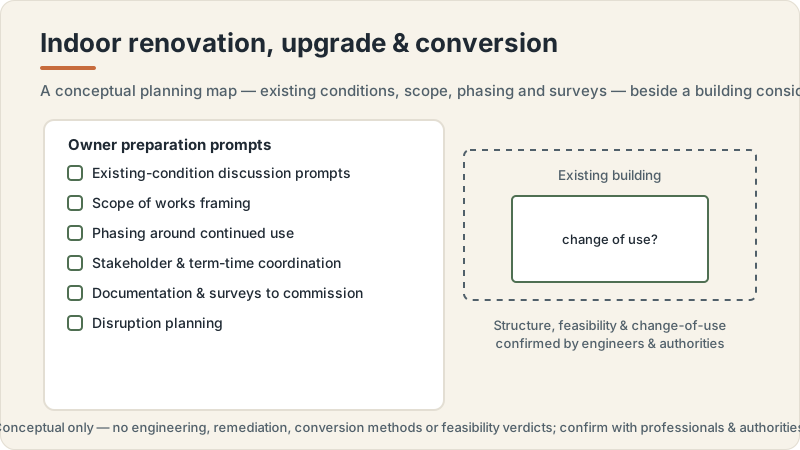
Indoor renovation, upgrade and conversion concept
Conceptual editorial diagram — not a construction drawing, specification, to-scale plan or proof of a real project. It is not engineering, structural, fire/life-safety, crowd-safety or accessibility-compliance guidance. Capacities, dimensions, standards, requirements and costs vary by facility type, audience, site, use case and governing body, and are confirmed with qualified professionals, relevant authorities and governing bodies. Build Design Hub does not design, build, inspect, certify, recommend or match anyone.
What this guide helps you prepare
A school gym renovation rarely happens in isolation. The space is used across the school day for lessons, before- and after-school clubs, examinations, assemblies and often community bookings in the evenings and at weekends. This guide helps you assemble the information and stakeholder input needed to describe what you want to improve, why it matters, and what constraints the renovation must respect. That preparation becomes the foundation of a project brief you can share with qualified professionals rather than a set of decisions you make alone.
The aim is to arrive at professional conversations already knowing your objectives, your users, your calendar pressures and the documentation you can provide. This guide does not tell you how to renovate, what materials or systems to choose, or what any space must measure or contain. Instead it helps you frame the questions and gather the records so that architects, engineers, and other qualified specialists can advise you accurately for your specific site, use case and governing body requirements.
- Clarify why the renovation is being considered and what problems it is meant to address
- Identify every group that uses the gym and how they use it across the week and year
- Assemble existing drawings, records and previous project documents in one place
- Distinguish owner decisions (scope, priorities, budget approval process) from professional decisions (design, systems, compliance)
- Prepare a brief that a professional team can review, question and refine
- Record open questions to raise with qualified professionals and relevant authorities
Stakeholder coordination for a shared school space
A school gym serves overlapping communities, and each has a stake in a renovation. PE and sports staff know how the space performs during teaching; caretaking and estates staff understand its condition and maintenance history; senior leadership and governors hold budget and approval authority; and external clubs or community users depend on continued access. Mapping these groups early, and agreeing who is consulted, who decides and who simply needs to be kept informed, prevents late surprises and helps a project team understand competing priorities before design begins.
Coordination also means agreeing how decisions will be made and recorded. A single point of contact for the project, a shared log of decisions and open questions, and an agreed way to gather feedback all reduce confusion when many voices are involved. This guide does not assign roles or make governance recommendations for your organisation; it helps you prepare the structure for those conversations. Confirm any formal consultation, approval or notification obligations with your governing body, education authority and relevant professionals, as these vary by owner, location and project scope.
- List internal stakeholders (leadership, PE staff, estates, finance, governors) and their interest in the project
- List external users (clubs, community bookings, exam or event uses) and how a renovation affects them
- Decide who is consulted, who approves and who is informed for each type of decision
- Agree a single project contact and a shared record of decisions and open questions
- Capture what each group values most about the current space and hopes to improve
- Note any consultation or approval steps to confirm with your governing body or authority
Term-time disruption and phasing considerations
Because a school gym is in near-constant use, timing is often the single largest planning question. Renovation work may compete with lessons, examinations, clubs, community bookings and caretaking routines. Preparing a clear picture of when the space is used, when it could be released, and what alternative arrangements might exist for displaced activities helps a professional team understand the constraints they are working within. Holiday periods, quieter parts of the timetable and the availability of alternative spaces are all worth documenting before any programme is discussed.
This guide does not set schedules, sequence work, or state how long anything takes, and it makes no claim about what phasing is feasible for your project. Those judgements belong to qualified professionals who understand the specific works involved. Your role in preparation is to describe the calendar honestly, flag the immovable dates, and identify who must be told when access changes. Timelines, phasing feasibility and access arrangements vary by facility type, site, project scope and professional team, so confirm all of them with the qualified professionals engaged for your project.
- Map the full annual and weekly usage calendar, including exams, clubs and community bookings
- Identify immovable dates and periods when disruption would be least acceptable
- Note any alternative spaces or arrangements for displaced activities, without assuming they suffice
- List who must be notified when access to the gym changes and how far in advance
- Record access, storage, delivery and site-boundary constraints on a live school site
- Prepare questions about phasing feasibility for qualified professionals rather than assuming a sequence
Planning questions before speaking with professionals
Before engaging a professional team, it helps to answer a set of questions among your own stakeholders so that your brief is coherent. These questions are about priorities, constraints and information, not technical solutions. Working through them internally reveals where the group agrees, where it does not, and what you still need to find out. It also surfaces assumptions, such as a belief that a particular improvement is simple, that are better tested by a qualified professional than carried into the project unexamined.
Treat this stage as organising your own thinking rather than reaching conclusions about design or systems. Nothing here should be settled as a technical fact; anything touching dimensions, capacities, systems, safety, accessibility or compliance is a matter for qualified professionals and relevant authorities. Requirements vary by location, facility type, use case, governing body, owner, site, authority, professional team and project scope, so record these items as things to confirm.
- What outcomes matter most, and how would we know the renovation succeeded?
- Which uses of the gym are essential to protect, and which are flexible?
- What documentation do we already hold, and what is missing or out of date?
- What budget approval, funding and decision process applies to this project?
- What have stakeholders raised as concerns that we cannot answer ourselves?
- What questions about feasibility, sequencing or systems must go to a professional?
Questions for qualified professionals
Once your brief and documentation are ready, the value of a professional conversation comes from asking clear questions and requesting the right documentation. Rather than seeking figures or specifications from this guide, use these prompts to understand what a professional will assess, what records they need, and how they will advise on matters such as building systems, accessibility, safety and compliance for your specific facility and jurisdiction. Asking what documentation to request, and keeping a record of the answers, gives you an auditable basis for later decisions.
Keep the boundary clear: this guide helps you prepare questions, not answer them. Building-systems matters such as ventilation, lighting, acoustics, temperature and accessibility, and any question of permits, codes, capacities or safety, sit entirely with qualified professionals and relevant authorities. Confirm every requirement, standard and figure with the professionals engaged for your project, because they vary by location, facility type, governing body, site, authority and scope.
- What surveys, assessments or documentation will you need from us to advise on this renovation?
- How do you determine what requirements, standards or governing-body rules apply to this facility?
- What documentation should we request from you to record decisions on building systems and accessibility?
- Which decisions are yours as professionals, and which remain ours as the owner?
- How will you approach safety, accessibility and compliance matters, and who confirms them with authorities?
- What should we ask relevant authorities or governing bodies directly, and at what stage?
What this does not replace
This is an educational planning resource only. It is not an indoor sports facility construction manual and not structural or architectural design, HVAC/ventilation, lighting or acoustic engineering, fire or life-safety, or accessibility-compliance advice, and it is not permit, zoning, inspection, certification, legal, tax, insurance or procurement advice. It does not design, build, engineer, specify, size, certify, inspect or approve anything, gives no capacities, dimensions, clearances, lux, air-change rates, acoustic or temperature thresholds, revenue, ROI or costs, and offers no warranty interpretation or estimate. Requirements, standards, capacities and costs vary by location, facility type, use case, governing body, owner, site, authority, professional team and project scope, and are confirmed with qualified professionals, relevant authorities and governing bodies.
Build Design Hub does not design, build, engineer, inspect, certify, recommend, rank, verify, introduce, broker or match suppliers, contractors, consultants or professionals, and HELPERG LLC is publisher/operator only. Use this resource to prepare your own thinking and briefs, then have the qualified professionals you engage directly — architects, structural and building-services engineers, lighting, acoustic, accessibility and fire/life-safety specialists, and legal or procurement advisors where appropriate — review your project. Decisions about design, engineering, systems, safety, accessibility, compliance, capacity, procurement and cost must rest on those professionals, the relevant authorities and the governing bodies for your sport and location.
- Not an indoor sports facility construction manual and not structural or architectural design
- Not HVAC/ventilation, lighting or acoustic engineering, fire/life-safety or accessibility-compliance advice
- Not permit/zoning, inspection, certification, warranty-interpretation, legal, tax, insurance or procurement advice
- Not a supplier, contractor, consultant or professional recommendation, ranking, directory or matching service
- Not an estimate and gives no capacity, dimension, system-performance, revenue, ROI or cost figures — requirements and costs vary
- Qualified professional review is required before any indoor sports facility project decision
School gym renovation preparation worksheet
- 1Record the reasons for the renovation and the outcomes stakeholders hope to achieve
- 2List every internal and external group that uses or oversees the gym
- 3Gather existing drawings, condition records, maintenance logs and prior project documents
- 4Assemble the full weekly and annual usage calendar, marking immovable dates
- 5Note exam periods, club sessions and community bookings that renovation could affect
- 6Identify possible alternative spaces for displaced activities, as questions to confirm
- 7Document site access, delivery, storage and boundary constraints on a live school site
- 8Record the budget approval, funding and decision-making process for the project
- 9Map who is consulted, who approves and who is informed for each decision type
- 10Log stakeholder concerns and questions the group cannot answer internally
- 11List consultation, approval or notification steps to confirm with your governing body
- 12Prepare questions on feasibility, phasing and systems for qualified professionals
- 13Note the documentation to request from professionals for each area of the project
- 14Keep a running register of open questions and who is responsible for resolving each
Common mistakes to avoid
- Stating a dimension, capacity or clearance as fixed instead of confirming it with qualified professionals
- Assuming requirements or standards apply without checking with the relevant governing body and authorities
- Treating a building-system choice (ventilation, lighting, acoustics, temperature) as an owner decision rather than a professional one
- Committing to a timeline or phasing sequence before a professional has assessed feasibility
- Skipping professional review of accessibility, safety or compliance matters to save time
- Planning around term-time without documenting exams, clubs and community bookings that share the space
- Consulting only leadership and overlooking PE staff, caretakers or external gym users
- Assuming an alternative space is adequate for displaced activities without confirming it
When to involve a professional
- When any decision touches structure, building systems, accessibility, safety or fire matters
- Before assuming a renovation approach is feasible within your term-time constraints
- When requirements, standards or governing-body rules for your facility need to be confirmed
- When existing documentation is incomplete, outdated or unclear and a survey may be needed
- Before finalising scope, phasing or sequencing that affects a live, occupied school site
- When permits, codes, certification or authority approvals may be involved in the project
Frequently asked questions
Questions readers ask about this topic
Does Build Design Hub design, build or manage my school gym renovation?
No. Build Design Hub is an educational resource only. It does not design, build, engineer, inspect, certify or project-manage anything, and it does not design HVAC, lighting, acoustic or other building systems. It does not recommend, rank, verify or match suppliers, contractors or professionals, and it provides no capacities, dimensions, costs or requirements. This guide helps you prepare to work with qualified professionals who do that work.
Can this guide tell me what size, capacity or standards my gym must meet?
No. This guide gives no dimensions, capacities, clearances, targets or requirements, and nothing here is a specification. Such matters vary by location, facility type, use case, governing body, owner, site, authority, professional team and project scope. Confirm every figure and standard with qualified professionals and the relevant authorities for your project.
How do I plan a renovation around the school term without disrupting lessons?
Start by documenting your full usage calendar, immovable dates and any alternative arrangements, then bring that picture to qualified professionals. This guide does not set schedules, sequence work or judge what phasing is feasible; those decisions belong to the professionals engaged for your specific project.
Who should be involved in preparing the project brief?
That depends on your organisation, but the preparation typically benefits from input across leadership, PE and estates staff, finance or governance, and external users of the gym. This guide helps you map stakeholders and structure discussions; it does not assign roles or make governance recommendations. Confirm any formal consultation or approval steps with your governing body and authority.
Keep reading