
Who this guide is for
- Stadium and venue owners preparing to take on operational responsibility for a completed facility
- Sports clubs and their operations staff who will run day-to-day events in the building
- Municipalities, councils and public bodies commissioning a community or civic stadium
- Schools, universities and colleges receiving a sports stand or spectator facility
- Property developers and project sponsors coordinating a handover with their delivery team
- Incoming facility managers and building operators assembling their operations knowledge base
Planning diagram
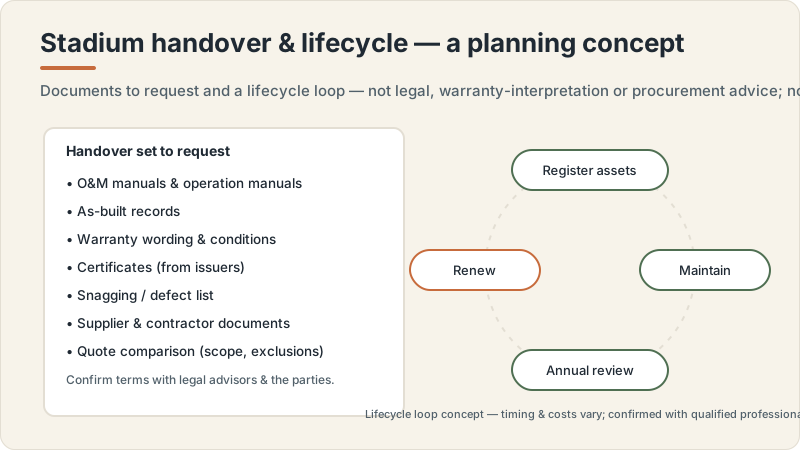
Stadium handover and lifecycle concept
Conceptual editorial diagram — not a construction drawing, specification, to-scale plan or proof of a real project. It is not engineering, structural, fire/life-safety, crowd-safety or accessibility-compliance guidance. Capacities, dimensions, standards, requirements and costs vary by facility type, audience, site, use case and governing body, and are confirmed with qualified professionals, relevant authorities and governing bodies. Build Design Hub does not design, build, inspect, certify, recommend or match anyone.
What this guide helps you prepare
This guide helps you build a structured picture of what a well-organised stadium handover might involve, so you arrive at professional discussions with clear questions rather than vague expectations. It focuses on the information transfer that sits at the heart of handover: the operations and maintenance (O&M) manuals, the as-built records, the equipment and systems documentation, and the register of outstanding items that a project team hands to the party who will operate the venue. Preparing this thinking early tends to reduce surprises when the formal process begins.
It is important to be clear about what this guide is and is not. It is educational preparation material to support your project brief, stakeholder conversations and quote-comparison structures. It is not a handover procedure, an acceptance sign-off, a defects-liability interpretation, or advice on inspection, certification, warranties, safety, accessibility or compliance. When this guide raises a topic such as commissioning evidence or documentation completeness, treat it as a prompt to ask your qualified professionals and relevant authorities, never as a statement of what is required.
- Understand the difference between preparing for handover and completing a formal acceptance or certification process
- Organise the categories of documentation you may want to see before taking on the facility
- Draft questions about O&M manuals, as-built records and systems information for your professional team
- Frame how snagging and outstanding-items tracking might be discussed and recorded
- Clarify who inside your own organisation will own operations knowledge after handover
- Prepare stakeholder conversations without assuming any specific requirement, standard or timeline
Documentation and as-built records to request
A central part of preparing for handover is knowing what documentation packages a stadium project might produce, so you can ask your delivery team which of them will be provided and in what form. These commonly include as-built drawings that reflect what was actually installed rather than what was originally drawn, O&M manuals for building systems and equipment, commissioning and testing records, warranty and guarantee paperwork held by the project team, asset registers, and information needed to keep systems running. The exact contents, format and completeness vary by project, so your role in preparation is to ask what exists and how it will be transferred, not to assume a fixed list.
Thinking about format and usability matters as much as the list itself. A handover pack that arrives as an unsorted box of files is harder to operate from than one structured around systems, spaces and assets. In your preparation you can consider how you would want records organised, whether digital copies and searchable formats are expected, who will hold the master set, and how the pack will be kept current as the venue is used. Frame all of this as questions for your professionals and the relevant parties; do not treat any particular structure or standard as a requirement.
- Which as-built drawings, models or record documents will be provided, and in what formats
- What O&M manuals cover for building systems, equipment and installed assets
- Whether commissioning, testing and balancing records will be included and how they are labelled
- How warranties, guarantees and supplier contacts held by the project team will be transferred
- What asset register or equipment schedule is expected, and how spares and consumables are documented
- Who holds the master documentation set and how it stays current once operations begin
Framing snagging and outstanding-items tracking
Snagging, sometimes described as a punch list or defects list, is the way outstanding or incomplete items are recorded so they can be discussed and resolved. In preparation, it helps to understand that snagging is a shared tracking exercise between the owner and the project team, not something you decide unilaterally, and not the same as any formal acceptance or defects-liability position. Your goal before speaking to professionals is to think about how items might be captured, categorised and revisited, so the conversation about outstanding work is organised rather than reactive.
When you frame this thinking, focus on process and clarity instead of judging severity or setting deadlines, which are matters for your qualified professionals and the relevant agreements. Consider how an item is described, where it is located, who raises it, how status is tracked, and how you would revisit items after they are addressed. Avoid treating any snag as trivial or urgent on your own assessment; instead prepare to ask your professional team how items should be classified and what the appropriate route to resolution is under your specific arrangements.
- How outstanding or incomplete items will be recorded, located and described in a shared list
- Who is expected to raise, review and update items, and how status changes are logged
- How you would prepare to walk the venue methodically rather than spot-checking at random
- What questions to ask professionals about categorising items rather than judging severity yourself
- How resolved items are re-checked and closed off in the tracking record
- How the snagging record relates to acceptance and defects arrangements you should confirm with professionals
Planning questions before speaking with professionals
Before you engage your qualified professional team, it is useful to gather internal clarity so those conversations are efficient and specific to your situation. This means understanding your own operational context: who will run the venue, what events it is intended to host, what your organisation can maintain, and what knowledge gaps you have. Preparation at this stage is about framing your needs and uncertainties, not answering technical questions yourself. The clearer you are about what you do not know, the more targeted your professional discussions can be.
You can also use this stage to align internal stakeholders so you speak with one voice. Owners, operators, finance, events and maintenance functions often hold different assumptions about what handover delivers, and surfacing those differences early prevents conflicting requests later. Keep every planning question framed as something to confirm, because requirements vary by location, facility type, use case, governing body, owner, site, authority, professional team and project scope; confirm all of them with qualified professionals.
- Who inside your organisation will own the facility, its documentation and its operations after handover
- What events and uses you expect the venue to support, framed as context rather than fixed specifications
- What maintenance and operations capability you have in-house versus what may be outsourced
- Which stakeholders must agree on what a successful handover looks like for your project
- What documentation and knowledge gaps you already know you have and want professionals to address
- What questions about scope, sequence and responsibilities you want to raise before formal handover begins
Questions for qualified professionals
When you reach the point of speaking with qualified professionals, your prepared questions should focus on confirming process, responsibilities and documentation rather than seeking simple yes-or-no answers about safety, compliance or acceptance. Professionals such as your architect, engineers, project or handover manager, commissioning specialists, and relevant advisors can explain how the handover for your specific project is structured, what evidence will accompany it, and what you should confirm with the relevant authorities and governing bodies. Bring your questions organised by theme so nothing is missed.
Remember that Build Design Hub does not design, build, engineer, inspect, certify, recommend, rank, verify, introduce, broker or match any of these professionals; the questions below are prompts you take to your own appointed team. Treat their guidance, and that of the relevant authorities and governing bodies, as the authoritative source. Anything this guide mentions about documentation, snagging or readiness is a starting point for discussion, never a requirement, standard or assurance.
- How is handover structured for this project, and what marks the transition from delivery to operation?
- What documentation, O&M manuals and as-built records will be provided, and how is completeness confirmed?
- What inspections, commissioning, certifications or approvals should we confirm with authorities and governing bodies?
- How should outstanding items be categorised and resolved, and how does that relate to acceptance and defects arrangements?
- What training and knowledge transfer is planned for the people who will operate and maintain the venue?
- What ongoing obligations, warranties or reviews should we plan for after we take on the facility?
What this does not replace
This is an educational planning resource only. It is not a stadium construction manual and not structural, architectural, seating or stand engineering, crowd-safety, crowd-flow, evacuation, fire or life-safety, or accessibility-compliance advice, and it is not permit, zoning, inspection, certification, legal, tax, insurance or procurement advice. It does not design, build, engineer, specify, certify, inspect or approve anything, gives no capacities, dimensions, loads, revenue, ROI or costs, and offers no warranty interpretation or estimate. Requirements, standards, capacities and costs vary by location, facility type, use case, governing body, owner, site, authority, professional team and project scope, and are confirmed with qualified professionals, relevant authorities and governing bodies.
Build Design Hub does not design, build, engineer, inspect, certify, recommend, rank, verify, introduce, broker or match suppliers, contractors, consultants or professionals, and HELPERG LLC is publisher/operator only. Use this resource to prepare your own thinking and briefs, then have qualified professionals you engage directly review your project. Decisions about design, engineering, structure, crowd safety, fire and life safety, accessibility, compliance, capacity, procurement and cost must rest on those professionals, the relevant authorities and the governing bodies for your sport and location.
- Not a stadium construction manual and not structural, architectural or seating/stand engineering
- Not crowd-safety, crowd-flow, evacuation, fire/life-safety or accessibility-compliance advice
- Not permit/zoning, inspection, certification, warranty-interpretation, legal, tax, insurance or procurement advice
- Not a supplier, contractor, consultant or professional recommendation, ranking, directory or matching service
- Not an estimate and gives no capacity, dimension, revenue, ROI or cost figures — requirements and costs vary
- Qualified professional review is required before any stadium project decision
Stadium handover preparation register
- 1Record who in your organisation will own the facility, its documentation and its operations after handover
- 2List the documentation packages you want to ask about: as-built records, O&M manuals, commissioning records, asset registers
- 3Note the formats you would prefer for records (digital, searchable, structured by system or space) as a discussion point
- 4Gather the names and roles of the professionals you will ask to explain the handover process
- 5Draft your questions about how snagging and outstanding items will be captured, tracked and closed
- 6Record which internal stakeholders must agree on what a successful handover looks like
- 7Note the events and uses you expect the venue to support, as context rather than fixed specifications
- 8List your known documentation or knowledge gaps to raise with professionals
- 9Capture questions about warranties, guarantees and supplier contacts to be transferred at handover
- 10Prepare questions on training and knowledge transfer for your operations and maintenance staff
- 11Note the inspections, certifications and approvals to confirm with authorities and governing bodies
- 12Record how the master documentation set will be held and kept current after operations begin
- 13Write down questions about ongoing obligations and reviews after you take on the facility
- 14Keep a note beside each item that requirements vary and must be confirmed with qualified professionals
Common mistakes to avoid
- Treating this preparation as a formal acceptance, certification or sign-off rather than as planning for those conversations
- Assuming a fixed list of handover documents applies to every project instead of confirming what your project will actually provide
- Stating capacities, dimensions, timelines, costs or standards as facts rather than questions to confirm with professionals
- Judging the severity or urgency of snagging items yourself instead of asking professionals how items should be categorised
- Skipping alignment among internal stakeholders, so operators, finance and events arrive with conflicting expectations
- Accepting an unstructured pile of records without asking how documentation will be organised and kept current
- Overlooking training and knowledge transfer, leaving operations staff without the information handover is meant to deliver
- Assuming warranties, approvals or inspections are covered without confirming their status with the relevant authorities and your team
When to involve a professional
- When you are unsure how handover, acceptance and defects arrangements are structured for your specific project
- When you need to confirm which inspections, certifications or approvals apply with the relevant authorities and governing bodies
- When outstanding items need categorising or resolving and you should not judge their severity yourself
- When documentation, commissioning or as-built records appear incomplete and you need professional interpretation
- When operations, maintenance, safety, accessibility or compliance questions arise that this educational guide cannot answer
- When contractual, warranty, insurance or legal responsibilities around taking on the facility need qualified advice
Frequently asked questions
Questions readers ask about this topic
Does Build Design Hub design, build, engineer, inspect or certify stadiums, or recommend suppliers?
No. Build Design Hub is an educational resource that helps you prepare questions and planning notes. It does not design, build, engineer, inspect, certify, recommend, rank, verify, introduce, broker or match any suppliers, contractors, consultants or professionals, and it does not provide capacities, costs, dimensions, timelines, standards or requirements. Those matters belong to your qualified professionals and the relevant authorities and governing bodies.
Is this guide a stadium handover or acceptance procedure I can follow?
No. It is preparation material to help you think through handover before speaking with professionals. It is not an acceptance process, a defects-liability interpretation, or advice on inspection, certification or warranties. Any formal handover or acceptance should be carried out through your own appointed team and the applicable agreements and authorities.
What documents should I expect at handover?
This guide cannot tell you what will or must be provided, because the contents vary by location, facility type, use case, governing body, owner, site, authority, professional team and project scope. Use the register here to ask your delivery team and professionals which documents your project will provide and in what form, and confirm what applies to you.
How should I handle snagging or a list of outstanding items?
Treat snagging as a shared tracking exercise to discuss with your project team, not something to judge alone. Prepare by thinking about how items are recorded, located and closed, then ask your qualified professionals how items should be categorised and resolved and how that relates to acceptance and defects arrangements in your specific project.
Keep reading