
Who this guide is for
- Stadium and venue owners preparing for the transition from build completion to operations
- Sports clubs and organisations planning how a new or refurbished home ground will run day to day
- Municipalities and public bodies coordinating operations planning for a civic or community venue
- Schools, colleges and universities preparing a sports facility for match-day and event use
- Developers and project teams assembling handover, commissioning-conversation and operations documentation
- Facility managers and operations leads scoping staffing, processes and approvals before opening
Planning diagram
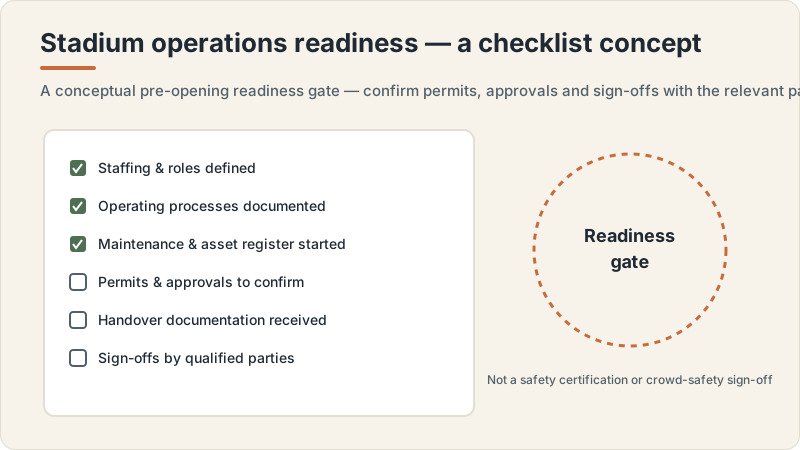
Stadium operations readiness concept
Conceptual editorial diagram — not a construction drawing, specification, to-scale plan or proof of a real project. It is not engineering, structural, fire/life-safety, crowd-safety or accessibility-compliance guidance. Capacities, dimensions, standards, requirements and costs vary by facility type, audience, site, use case and governing body, and are confirmed with qualified professionals, relevant authorities and governing bodies. Build Design Hub does not design, build, inspect, certify, recommend or match anyone.
What this guide helps you prepare
This guide helps you assemble a structured picture of what operating a stadium is likely to involve before you talk to the professionals, authorities and governing bodies who hold the answers. It focuses on the readiness themes an owner or project team can usefully organise in advance: how the venue will be staffed, which processes and roles need to exist, what handover material should be collected from the construction and commissioning phases, and which permits, approvals and confirmations need to be pursued with the relevant parties. The aim is to arrive at those conversations organised, with your questions written down and your open items visible.
It is explicitly not an operations certification, a readiness sign-off, or an assurance that a venue can open. It does not tell you what your staffing levels, capacities, licences or safety arrangements should be, because those depend entirely on your jurisdiction, facility type, intended use, governing body and the professional advice you obtain. Treat every item here as a prompt to record, question and confirm, rather than as a requirement or a fact. Where an item touches safety, occupancy, accessibility or licensing, it is flagged as something only qualified professionals and the relevant authorities can determine.
- Record what you currently know about intended uses, event types and operating patterns, and mark every gap as a question for professionals
- List the operational domains you expect to need (staffing, cleaning, catering coordination, maintenance, security liaison) without assuming ratios or requirements
- Gather the handover, commissioning and as-built documentation you will need to request from the project team
- Note which approvals, permits and licences you believe may apply so you can confirm applicability with the relevant authorities
- Capture stakeholder roles: who owns operations, who liaises with authorities, who signs decisions
- Keep a running register of assumptions to test with qualified professionals rather than treating them as settled
Framing staffing and operational processes for discussion
Operations readiness planning benefits from mapping the functions a venue is likely to run, then treating the sizing, roles and arrangements of each as open questions. You can usefully sketch the operational domains you anticipate, such as facility maintenance, cleaning, ground or pitch care, catering and hospitality coordination, ticketing operations, event-day coordination, security liaison and stewarding arrangements, and communications. For each, the useful preparation is to note what the function is for, who might own it, and what decisions it depends on, so you can bring a coherent picture to the professionals and authorities who will advise on staffing levels, competencies, licences and arrangements.
Processes deserve the same treatment. Rather than writing procedures yourself, prepare a list of the operational processes you expect a venue of your type to need, and identify who should draft, review and approve each with appropriate professional input. Matters touching crowd management, stewarding, medical provision, evacuation and life safety are not for you to design or specify in this planning; they are questions to route to qualified professionals and the relevant authorities. Keep your preparation at the level of scope, ownership and open questions, and let the specialists determine content, adequacy and compliance.
- What operational functions do you anticipate needing, and who might own each on a day-to-day basis?
- Which roles depend on specific competencies, licences or accreditations to confirm with qualified professionals?
- What processes should exist, and who should draft, review and approve each with professional input?
- Which operational matters touch safety, stewarding or medical provision and therefore belong entirely with specialists and authorities?
- How will you record training, briefing and handover needs without assuming any specific standard?
- What contractor and supplier relationships underpin operations, and how will their scope be defined and confirmed?
Organising handover, commissioning documentation and lifecycle records
A major part of operations readiness is knowing what documentation to request as the venue moves from construction into use, so the operations team can run and maintain it responsibly over its lifecycle. Prepare a list of the material you expect to need from the project, design and commissioning teams, and treat it as a request-and-confirm exercise rather than something you generate. This typically includes as-built and asset information, operation and maintenance material, warranty and guarantee documentation, commissioning records for building systems, and any manuals or schedules that support ongoing upkeep. What specifically applies, and what any document means for your obligations, is something to confirm with the professionals who produced it.
Lifecycle planning sits alongside handover. You can prepare questions about how assets will be maintained, how records will be kept, and how future refurbishment or reconfiguration might be planned, all without stating maintenance intervals, service lives, costs or standards as facts. The value of this preparation is a clear register of what you hold, what you are still waiting for, and what you need explained, so the handover conversation with your project team and any facility-management advisers is complete rather than reactive. Interpretation of warranties, inspection records and certificates always belongs with qualified professionals.
- What handover documentation should you request from the project, design and commissioning teams?
- Which as-built, asset and operation-and-maintenance records do you need to run and maintain the venue?
- How will warranties, guarantees and their conditions be documented and explained by those who issued them?
- What commissioning records for building systems should be provided, and who confirms their scope?
- How will you keep an asset and documentation register that supports lifecycle and future-works planning?
- Which documents require professional interpretation rather than being taken at face value by the operations team?
Planning questions before speaking with professionals
Before you engage professionals and approach authorities, it helps to answer as much as you can about your own intentions so their advice can be specific. Clarify who the owner and decision-makers are, what the venue is intended to be used for, what event types and operating patterns you envisage, and what you already know versus what remains open. This self-assessment does not determine any requirement; it simply lets you describe your project accurately and lets the professionals tell you what applies. The clearer your intended-use picture, the more useful the guidance you receive on staffing, processes, permits and approvals will be.
It also helps to organise your governance and stakeholder map in advance. Identify who liaises with the relevant authorities and governing bodies, who owns each operational domain, who holds budget and decision authority, and how you will track open questions and assumptions. Prepare a register of the permits, approvals and licences you think may be relevant so you can ask each authority whether and how they apply, rather than assuming. Bring this to your professional conversations as a set of questions and unknowns, not as conclusions.
- Who is the owner, and who holds decision, budget and sign-off authority for operations?
- What are the intended uses, event types and operating patterns you can describe today?
- Which authorities, governing bodies and licensing regimes do you think may be involved, and how will you confirm this?
- Who will liaise with authorities and professionals, and how will their questions and responses be tracked?
- What assumptions are you currently making that should be flagged and tested rather than relied upon?
- How will you maintain a live register of open items, owners and target dates for resolution?
Questions for qualified professionals
When you engage qualified professionals and the relevant authorities, the goal is to convert your open items into confirmed guidance for your specific venue, use and jurisdiction. Frame your questions so the professional determines applicability, adequacy and compliance rather than confirming a number you have supplied. Ask what applies to your facility type and intended use, what approvals and licences must be obtained and from whom, and what operational arrangements they consider necessary given your context. Be explicit that you are seeking their determination, not validation of your assumptions, and record their answers against your open-items register.
The right professionals to involve depend on the matter in question, and may include operations and facility-management advisers, licensing and permitting specialists, safety and crowd-management professionals, medical and stewarding advisers, and the relevant authorities and governing bodies themselves. Ask each who else should be involved and where responsibilities hand off, so nothing falls between disciplines. Anything touching occupancy, crowd safety, evacuation, accessibility, life safety or licensing must be determined by the appropriate qualified professionals and authorities; this guide only helps you ask.
- Which permits, approvals, licences and governing-body confirmations apply to this venue, and who issues each?
- What staffing arrangements, competencies and accreditations do you consider necessary for our intended use?
- Which operational processes must exist, and who is qualified to draft, review and approve them?
- What must be confirmed regarding occupancy, crowd management, medical provision and life safety, and by whom?
- What handover, commissioning and inspection outcomes should we obtain before operating, and who interprets them?
- Which other professionals or authorities should we involve, and where do responsibilities hand off between them?
What this does not replace
This is an educational planning resource only. It is not a stadium construction manual and not structural, architectural, seating or stand engineering, crowd-safety, crowd-flow, evacuation, fire or life-safety, or accessibility-compliance advice, and it is not permit, zoning, inspection, certification, legal, tax, insurance or procurement advice. It does not design, build, engineer, specify, certify, inspect or approve anything, gives no capacities, dimensions, loads, revenue, ROI or costs, and offers no warranty interpretation or estimate. Requirements, standards, capacities and costs vary by location, facility type, use case, governing body, owner, site, authority, professional team and project scope, and are confirmed with qualified professionals, relevant authorities and governing bodies.
Build Design Hub does not design, build, engineer, inspect, certify, recommend, rank, verify, introduce, broker or match suppliers, contractors, consultants or professionals, and HELPERG LLC is publisher/operator only. Use this resource to prepare your own thinking and briefs, then have qualified professionals you engage directly review your project. Decisions about design, engineering, structure, crowd safety, fire and life safety, accessibility, compliance, capacity, procurement and cost must rest on those professionals, the relevant authorities and the governing bodies for your sport and location.
- Not a stadium construction manual and not structural, architectural or seating/stand engineering
- Not crowd-safety, crowd-flow, evacuation, fire/life-safety or accessibility-compliance advice
- Not permit/zoning, inspection, certification, warranty-interpretation, legal, tax, insurance or procurement advice
- Not a supplier, contractor, consultant or professional recommendation, ranking, directory or matching service
- Not an estimate and gives no capacity, dimension, revenue, ROI or cost figures — requirements and costs vary
- Qualified professional review is required before any stadium project decision
Stadium operations-readiness preparation register
- 1Record the owner, operator and decision-makers, and note who holds sign-off authority for operations
- 2Write down the intended uses, event types and operating patterns you can describe today, and mark every gap
- 3List the operational domains you anticipate (maintenance, cleaning, ground care, catering coordination, ticketing operations, event coordination, security liaison, communications) as scope, not staffing figures
- 4Note which roles you believe may need specific competencies, licences or accreditations, to confirm with professionals
- 5Draft a list of operational processes you expect to need, with an owner and reviewer noted for each
- 6Compile the handover documentation to request from the project, design and commissioning teams
- 7Gather or request as-built, asset and operation-and-maintenance records for the operations team
- 8Record warranty and guarantee documentation to obtain, noting that conditions need professional interpretation
- 9List commissioning records for building systems you expect to receive, and who confirms their scope
- 10Prepare a register of permits, approvals and licences you think may apply, to confirm applicability with each authority
- 11Identify who liaises with authorities and governing bodies, and how their questions and answers are tracked
- 12Maintain a live assumptions log, flagging every item to be tested rather than relied upon
- 13Keep an open-items register with owner, status and target date for each unresolved question
- 14Record which matters (occupancy, crowd safety, evacuation, accessibility, life safety, licensing) are reserved entirely for qualified professionals and authorities
Common mistakes to avoid
- Treating stated staffing ratios, capacities or licence requirements as fixed facts instead of confirming them with authorities and professionals for the specific venue and use
- Assuming which permits and approvals apply, rather than asking each relevant authority whether and how they apply
- Writing crowd-management, stewarding, medical or evacuation procedures in-house instead of routing them to qualified professionals
- Skipping professional review of handover, commissioning and warranty documentation, or interpreting certificates without the people who issued them
- Beginning operations planning without a clear description of intended uses, event types and decision authority
- Confusing this preparation with an operations certification or readiness sign-off that only authorities and professionals can give
- Failing to keep an open-items and assumptions register, so unresolved questions are lost before professional conversations happen
- Treating a project team's completion of construction as automatic confirmation that the venue is ready to operate
When to involve a professional
- When any question touches occupancy, crowd management, stewarding, evacuation or life safety, which must be determined by appropriate qualified professionals and authorities
- When you need to confirm which permits, approvals, licences or governing-body requirements apply to your venue and intended use
- When staffing competencies, accreditations or arrangements need to be defined for your specific operating context
- When handover, commissioning, warranty or inspection documentation needs interpretation or confirmation of scope
- When accessibility, licensing, legal, tax, insurance or procurement matters arise, which fall entirely outside this guide
- Before treating any venue as ready to operate, since readiness sign-off belongs to the relevant professionals and authorities
Frequently asked questions
Questions readers ask about this topic
Does this guide certify that a stadium is ready to open or safe to operate?
No. This is an educational planning resource that helps you organise questions, documentation and stakeholder conversations. It does not certify readiness, confirm safety, or provide any sign-off. Whether a venue can operate is determined solely by qualified professionals and the relevant authorities and governing bodies for your specific project.
Does Build Design Hub design, build, engineer, inspect or certify the venue, or recommend suppliers and contractors?
No. Build Design Hub does not design, build, engineer, inspect, certify, recommend, rank, verify, introduce, broker or match any suppliers, contractors, consultants or professionals, and gives no capacities, costs, staffing figures or requirements. It only helps you prepare questions and documentation to take to the qualified professionals and authorities who make those determinations.
Can this guide tell me the staffing levels, capacity or permits my stadium needs?
No. Those depend on location, facility type, intended use, governing body, owner, site, authority, professional team and project scope, and must be confirmed with qualified professionals and the relevant authorities. This guide helps you frame those as questions to ask, not as answers to assume.
How should I use the checklist and questions here?
Use them to build your own preparation register: record what you know, flag what you are assuming, and list what remains open. Then bring that structured picture to your professional and authority conversations so their guidance can be specific to your venue. Treat every item as a prompt, never as a requirement or a fact.
Keep reading