
Who this guide is for
- Owners and clubs preparing a new, replacement or upgraded stadium and weighing how spectators will reach it
- Municipalities and public bodies scoping a venue where parking, roads and transport links are shared or constrained
- Schools, colleges and community organisations planning a spectator venue that must be accessed on event days
- Developers and investors evaluating a stadium within a wider site where access and mobility shape feasibility
- Facility and operations managers organising arrival, drop-off, parking and transport questions before briefing advisers
- Project sponsors and committee members who need to map demand and transport dependencies before access work begins
Planning diagram
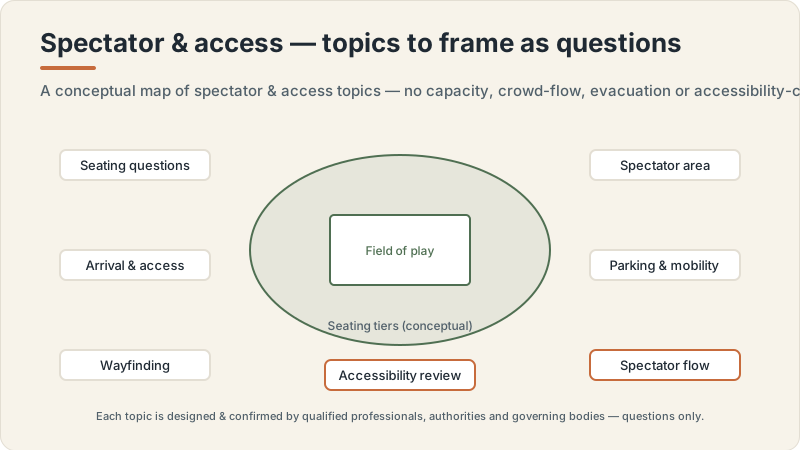
Stadium spectator and access concept
Conceptual editorial diagram — not a construction drawing, specification, to-scale plan or proof of a real project. It is not engineering, structural, fire/life-safety, crowd-safety or accessibility-compliance guidance. Capacities, dimensions, standards, requirements and costs vary by facility type, audience, site, use case and governing body, and are confirmed with qualified professionals, relevant authorities and governing bodies. Build Design Hub does not design, build, inspect, certify, recommend or match anyone.
What this guide helps you prepare
This guide helps you assemble the raw material an owner needs before engaging transport and mobility professionals on the access side of a stadium: an honest picture of who arrives and when, a map of the transport links the site depends on, a sense of how arrival and departure demand might peak across different event types, and a clear boundary around what the mobility scope includes. These are preparation artefacts you create and refine, not technical decisions you make alone. The clearer they are, the more focused your conversations with transport planners, highway authorities, mobility advisers and designers will be, and the easier it becomes to compare what they propose against a consistent brief.
It is equally important to be clear about what this guide does not do. It does not tell you how many parking spaces a venue needs, how wide an access road should be, how many drop-off bays or coach spaces to provide, how crowds should flow or evacuate, or how to satisfy any parking standard, highways requirement, accessibility provision or approval. All of those are determined by your professional team, the relevant authorities and the governing body for your use, and they vary by location, facility type, use case, site and audience. Your job at this stage is to prepare good questions and a good brief, not to supply answers that belong to qualified professionals.
- Write a plain description of who arrives at the stadium and on what kinds of occasions
- Note the realistic arrival and departure patterns you expect across different event types
- List the transport links the site relies on, without assuming what each can carry
- Record the access, parking and mobility constraints you already know about the site
- Capture open questions about demand, access and transport to route to professionals
- State your assumptions explicitly so they can be tested rather than carried forward unchecked
Understanding arrival demand and how spectators reach the venue
Before parking and mobility can be discussed sensibly, you need a grounded picture of demand: who arrives, in what rough proportions, by which modes, and when those movements concentrate. A stadium hosting a sold-out fixture generates very different patterns from one running a training session, a concert, a conference or a community event, and each event type can peak in a different way both before and after it ends. Describe these realistically and separately rather than averaging them, because it is usually the peaks, and the sharp departure surge when an event finishes, that shape access and mobility conversations. Resist the urge to fix numbers of spaces, vehicles or vehicles-per-hour at this stage; treat all of that as questions to confirm with qualified professionals once the demand picture is clear.
How people reach the venue matters as much as how many. Some spectators arrive by car and need parking; others walk, cycle, use rideshare or taxi drop-off, arrive by coach, or rely on rail, bus, tram or other public transport. Players, officials, media, staff, vendors, deliveries, VIP movements and emergency access each add their own patterns. Mapping these modes and the journeys behind them helps you describe the demand a professional team must plan for, and surfaces dependencies such as a single approach road, a shared station, or a transport link that may already be near its limits. Mapping demand and modes is about understanding the problem, not sizing the solution, which belongs to transport and mobility professionals.
- Which spectator and non-spectator groups arrive, and on which event types do their numbers peak?
- What mix of modes do you expect, such as car, walking, cycling, rideshare, coach, rail, bus or tram?
- How do fixtures, concerts, conferences, training and community events differ in arrival and departure patterns?
- What additional movements exist, such as players, officials, media, vendors, deliveries and emergency access?
- How does the post-event departure surge differ from the more spread-out arrival window?
- Which assumptions about demand and modes will you ask professionals to test rather than assume?
Mapping access, parking and transport links to discuss
Access is about the journey from the wider transport network to the stadium itself, and the points where that journey is shaped or constrained. It is worth describing, in plain terms, how vehicles, public transport and people are expected to approach the site, where they enter, how they move around it, and where they end up, because unclear edges between the public network, the site boundary, internal circulation and parking are where confusion and conflict form later. Note the transport links the site depends on, such as roads, junctions, stations, stops, footpaths and cycle routes, and flag anything you already know to be sensitive, like a residential neighbour, a shared interchange, or a constrained approach. The technical assessment of whether these links can serve the venue belongs to transport and highway professionals and the relevant authority.
Parking and mobility provision sits alongside access and is rarely just a count of spaces. Different demands may call for different thinking: general parking, accessible parking, drop-off and pick-up zones, coach and minibus space, rideshare and taxi areas, cycle parking, staff, media and official parking, and overflow arrangements for the busiest events. There are also the surroundings to consider, including how parking and dispersal interact with neighbours, how circulation separates vehicles from pedestrians, and how the area behaves when tens of thousands of people leave at once. Describe these needs as questions and scenarios rather than fixed quantities or layouts. This guide does not size, lay out, specify, model or design any parking, access or transport element, and it does not state any ratio, dimension or standard; identifying the demands you need professionals to address is simply part of preparing your brief.
- How are vehicles, public transport and people expected to approach the site, enter, circulate and disperse?
- Which roads, junctions, stations, stops, footpaths and cycle routes does the venue rely on?
- What types of parking and mobility provision might your demand suggest, framed as questions?
- Where might vehicles, public transport and pedestrians conflict, and which interfaces need careful thought?
- How might parking, drop-off and dispersal interact with neighbours, shared interchanges and the surroundings?
- What happens during the post-event peak, and how would overflow or surge demand be discussed with professionals?
Planning questions before speaking with professionals
Before you engage transport planners, mobility advisers or highway specialists, it pays to organise what you already know about arrival, parking and transport and what you still need to learn. Working through your own questions first means the professional conversations start further along and stay focused on the real constraints of your site and events. Capture your demand picture across event types, expected modes, the transport links the site depends on, known access and parking constraints, and your open questions in writing, and be candid about the assumptions you are making so they can be tested rather than quietly accepted. This preparation also makes it far easier to compare proposals later, because everyone is responding to the same clearly stated brief.
These questions are prompts to clarify your own thinking, not a checklist to satisfy. None of them should be answered with a fixed number of spaces, a dimension, a ratio, a cost or a standard at this stage. Anything touching parking provision, access design, highways, crowd flow, accessibility, drop-off arrangements, transport services or approvals is something to confirm with qualified professionals, the relevant authorities and the governing body for your use, all of which vary by location, facility type, use case, site and audience.
- Can you describe, in plain terms, who arrives, how, and when demand peaks for each event type?
- Have you mapped the transport links the site depends on and any you know to be constrained?
- Have you listed the types of parking, drop-off and mobility provision your demand might call for?
- Have you noted where vehicles, transport and pedestrians might conflict and which interfaces need attention?
- Have you written down assumptions and open questions to test with professionals?
- Have you noted which authorities, transport operators and consultations may be involved, without assuming their answers?
Questions for qualified professionals
When you reach the point of engaging transport, mobility and planning professionals, the most valuable thing you can bring is good questions framed against a clear brief. The questions below are examples of what owners commonly need professionals, authorities and governing bodies to confirm; they are deliberately open, because the answers depend entirely on your specific location, site, facility type, event mix, audience and the bodies that have jurisdiction over access, parking and transport. Asking them helps you understand what your project genuinely requires rather than guessing, and it surfaces access and mobility issues early, while they are still comparatively inexpensive to address.
Use the responses to inform your planning, not as a substitute for formal advice or approval. This guide does not provide parking ratios, dimensions, capacities, crowd-flow models, costs, standards or design, and it does not recommend, rank, verify, introduce or match any supplier, contractor or consultant. Confirm everything that matters with qualified professionals and the relevant authorities, transport operators and governing bodies for your project, and keep a record of what you are told so your brief stays accurate as parking and mobility planning develops.
- What transport, parking, highways and travel-plan assessments or approvals might this venue and site require?
- Which professional disciplines should be involved in access, parking and mobility planning, and in what order?
- How should we describe arrival and departure demand across event types so it can be assessed properly?
- What site, neighbour, highway, transport-operator or interchange factors should shape our mobility brief?
- What accessible-parking, drop-off, coach, cycle, rideshare and emergency-access considerations should we plan for?
- What information should we gather now so parking and mobility proposals can be compared consistently?
What this does not replace
This is an educational planning resource only. It is not a stadium construction manual and not structural, architectural, seating or stand engineering, crowd-safety, crowd-flow, evacuation, fire or life-safety, or accessibility-compliance advice, and it is not permit, zoning, inspection, certification, legal, tax, insurance or procurement advice. It does not design, build, engineer, specify, certify, inspect or approve anything, gives no capacities, dimensions, loads, revenue, ROI or costs, and offers no warranty interpretation or estimate. Requirements, standards, capacities and costs vary by location, facility type, use case, governing body, owner, site, authority, professional team and project scope, and are confirmed with qualified professionals, relevant authorities and governing bodies.
Build Design Hub does not design, build, engineer, inspect, certify, recommend, rank, verify, introduce, broker or match suppliers, contractors, consultants or professionals, and HELPERG LLC is publisher/operator only. Use this resource to prepare your own thinking and briefs, then have qualified professionals you engage directly review your project. Decisions about design, engineering, structure, crowd safety, fire and life safety, accessibility, compliance, capacity, procurement and cost must rest on those professionals, the relevant authorities and the governing bodies for your sport and location.
- Not a stadium construction manual and not structural, architectural or seating/stand engineering
- Not crowd-safety, crowd-flow, evacuation, fire/life-safety or accessibility-compliance advice
- Not permit/zoning, inspection, certification, warranty-interpretation, legal, tax, insurance or procurement advice
- Not a supplier, contractor, consultant or professional recommendation, ranking, directory or matching service
- Not an estimate and gives no capacity, dimension, revenue, ROI or cost figures — requirements and costs vary
- Qualified professional review is required before any stadium project decision
Stadium parking and mobility preparation worksheet
- 1Describe who arrives at the stadium and on which event types, separating routine from peak
- 2Note the arrival and departure patterns you expect for fixtures, concerts, conferences and community events
- 3Record the mix of modes you anticipate, such as car, walking, cycling, rideshare, coach, rail, bus and tram
- 4Capture how the post-event departure surge differs from the arrival window
- 5List additional movements, including players, officials, media, vendors, deliveries and emergency access
- 6Map the transport links the site relies on, such as roads, junctions, stations, stops and cycle routes
- 7Flag any access, interchange or transport link you already know to be constrained or sensitive
- 8List the types of parking, drop-off and mobility provision your demand might call for, as questions
- 9Note where vehicles, transport services and pedestrians could conflict and which interfaces need careful thought
- 10Record how parking and dispersal might interact with neighbours, shared interchanges and surroundings
- 11Capture what the busiest events look like and how overflow or surge demand would be discussed
- 12List the professional disciplines and transport operators that access and mobility planning may involve
- 13Note the authorities and consultations you anticipate, without assuming their answers
- 14Capture assumptions and open questions to test with qualified professionals, and decide who coordinates the topic
Common mistakes to avoid
- Focusing on the seating bowl and treating parking, access and mobility as an afterthought
- Averaging arrival demand instead of describing the peaks and the sharp post-event departure surge
- Fixing a number of spaces, bays or vehicles as fact before professionals have been consulted
- Planning only for cars and overlooking walking, cycling, rideshare, coaches, rail and emergency access
- Assuming one event type represents them all, when concerts, fixtures and community uses differ sharply
- Assuming a road, station or transport link can serve the venue without a professional assessment
- Leaving the edges between the public network, the site boundary, circulation and parking vague
- Engaging advisers without a clear demand picture, so conversations stay unfocused and hard to compare
When to involve a professional
- Involve transport and mobility professionals as soon as arrival demand points toward real access or parking needs, before any figures are fixed
- Engage highway and transport-authority advisers early, since access, parking and highways requirements vary by location and authority
- Consult planning, accessibility and travel-plan specialists for anything touching parking provision, drop-off, dispersal or inclusive access
- Bring in designers and engineers for any access road, parking area, interchange or transport interface, rather than sizing or laying it out yourself
- Consult the relevant authority, transport operators and governing body where the intended use may carry its own access, parking or event-transport requirements
- Route every question about parking ratios, dimensions, capacities, crowd flow, standards, accessibility or approvals to qualified professionals and authorities
Frequently asked questions
Questions readers ask about this topic
Does this guide tell me how many parking spaces or what transport capacity my stadium needs?
No. This guide is educational and does not state any number of spaces, ratio, dimension, capacity, cost or standard as fact. Those depend on your location, facility type, use case, site, event mix, audience and governing body, and must be confirmed with qualified professionals and the relevant authorities and transport operators.
Will Build Design Hub design my access, recommend suppliers, or connect me with contractors or transport consultants?
No. Build Design Hub does not design, build, engineer, model, inspect, certify, recommend, rank, verify, introduce, broker or match any supplier, contractor or consultant, and it provides no capacities, parking ratios, crowd-flow models, costs or requirements. This guide only helps you prepare your own briefs and questions for qualified professionals you select independently.
What should I prepare before contacting transport or mobility advisers?
Organise a realistic picture of who arrives and when across different event types, the modes you expect, the transport links the site relies on, known access and parking constraints, and your open questions. Arriving with a clear brief makes professional conversations more focused and lets you compare proposals on a consistent basis.
Who confirms what parking and mobility my stadium actually requires?
Qualified transport, mobility, highway and planning professionals, the relevant local authorities and transport operators, and the governing body for your intended use. Requirements vary by location, facility type, use case, site and audience, so confirm everything that matters with them rather than relying on general figures or assumptions.
Keep reading