
Who this guide is for
- Stadium and venue owners assembling a spectator-area brief before engaging designers and crowd-safety specialists
- Clubs and committees mapping spectator-experience priorities and open questions ahead of professional conversations
- Municipalities and public bodies coordinating a stadium spectator-area brief across departments and stakeholders
- Developers and project sponsors who must show a board how spectator considerations are being scoped and by whom
- Schools, colleges and community organisations planning stands or spectator areas at a preparation level
- Facility managers and operators recording how spectator areas will be run, reviewed and handed over
Planning diagram
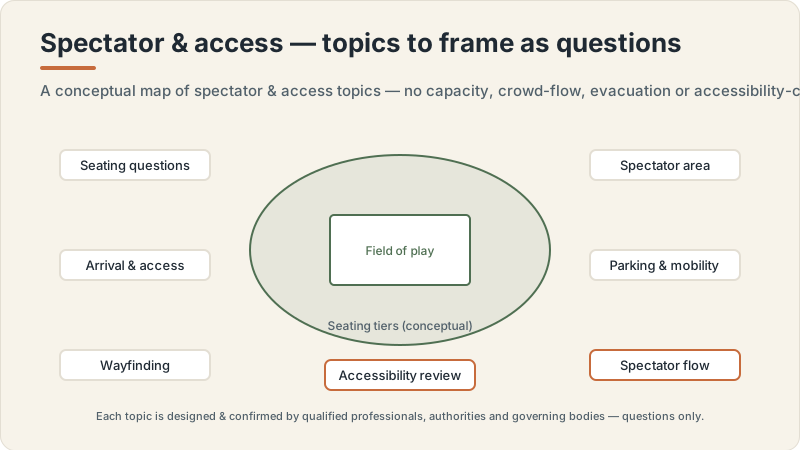
Stadium spectator and access concept
Conceptual editorial diagram — not a construction drawing, specification, to-scale plan or proof of a real project. It is not engineering, structural, fire/life-safety, crowd-safety or accessibility-compliance guidance. Capacities, dimensions, standards, requirements and costs vary by facility type, audience, site, use case and governing body, and are confirmed with qualified professionals, relevant authorities and governing bodies. Build Design Hub does not design, build, inspect, certify, recommend or match anyone.
What this guide helps you prepare
This guide helps you prepare a planning-level brief for the spectator areas of a stadium: an organised record of what matters to you, what you already know about the site and intended use, and which questions belong with qualified professionals. It is meant for the early window, when you are shaping scope and priorities and deciding who needs to be involved, and before any spectator-area design, seating engineering, crowd-safety assessment or capacity work is undertaken by the appropriate specialists. The output is a structured brief you can populate over time, not a design, a capacity figure or a safety judgement of any kind.
Preparing a brief does not settle spectator-area design, seating configuration, sightlines, comfort provision, capacity or safety, and it produces none of those. It frames those areas so the right professional can address them and captures their input in writing. Anything resembling a capacity, dimension, gradient, sightline value, load, lighting level, spacing or standard is deliberately left as a question here, because these vary by location, facility type, use case, governing body, owner, site, authority, professional team and project scope, and must be confirmed with qualified professionals, relevant authorities and governing bodies. Separating what you have confirmed from what is still open is what makes the brief useful.
- A structured brief capturing spectator-area priorities, intended uses and audiences at a planning level
- A view of which considerations you can note yourself and which need a qualified professional to define
- A record of open questions to take to designers, crowd-safety specialists, engineers and governing bodies
- A list of the professionals and authorities whose input the spectator-area brief will depend on
- A clear separation between what you have confirmed in writing and what remains an assumption
- A brief you can share with a board, funding partner or project team and keep current
Framing spectator-area considerations for the brief
It is easier to build a spectator-area brief when you treat it as a set of named considerations rather than a single description. At a planning level these often include who the spectators are and how the venue will be used across different event types, the general character of the spectator experience the owner wants, the amenities and support areas spectators expect near the seating bowl, the relationship between spectator areas and the wider site, and how the areas will be operated and reviewed once open. Noting the scope of each consideration yourself gives the brief a backbone. What goes inside the seating, sightline, capacity, comfort and safety considerations is then defined by the relevant professionals, not written as fact here.
The character of the spectator experience deserves early attention because it influences almost every professional conversation that follows, yet it is a matter of intent rather than specification at this stage. It helps to describe, in plain terms, the atmosphere and uses the owner has in mind, the range of events and audiences the venue should serve, and the general kinds of amenity spectators will expect nearby, while leaving every quantity, dimension, capacity and configuration to the qualified team. Anything tied to how many people an area holds, how seats are arranged, how people see the field of play, or how the area performs in an emergency carries requirements set by an authority, governing body, engineer or crowd-safety specialist, so record those as questions to confirm rather than details to decide in the brief.
- Describe who the spectators are and how the venue will be used across different event types
- Capture the character and atmosphere of the spectator experience the owner wants, in plain terms
- List the amenity and support areas spectators may expect near seating, as considerations not specifications
- Note the relationship between spectator areas and the wider site, access points and surroundings
- Flag every quantity, capacity, dimension, sightline or configuration as a question for the relevant professional
- Record which considerations you can note yourself and which depend on designer or specialist input
Spectator comfort, amenities and inclusive-experience considerations to record
Beyond the seating bowl itself, spectators interact with a range of supporting areas, and it helps to record these at a planning level as categories rather than as designed spaces. Owners often want to note considerations such as shelter and weather exposure, general comfort and dwell areas, refreshment and welfare provision, wayfinding and signage intent, and the desire for a spectator experience that welcomes a wide range of people. Listing these as headings gives designers and specialists a clear structure to advise against and helps you see where a brief is silent. What each category actually requires, and whether any provision is adequate, appropriate or compliant, is for qualified professionals and the relevant authorities to determine for your specific venue, use and location.
The wish for an inclusive, welcoming spectator experience belongs in the brief as an intent, expressed carefully. You can record that the owner wants spectator areas that serve a broad audience and that inclusive experience is a priority, while being clear that this guide gives no accessibility-compliance advice or claims and that any assessment of accessibility, adequacy or compliance rests entirely with qualified professionals and the relevant authorities. The same caution applies to comfort, welfare and amenity provision: note what the owner hopes to offer, note the questions this raises, and leave the definition of what is required, suitable or sufficient to the appropriate specialists, governing bodies and authorities rather than assuming it from this document.
- Record shelter, weather-exposure and general comfort considerations as categories for professional advice
- Note refreshment, welfare and support-area intentions without specifying quantities or configurations
- Capture wayfinding and signage intent as a consideration, leaving design to qualified professionals
- Record inclusive-experience intent as a priority while making no accessibility-compliance claims
- List which categories the brief mentions and which it currently leaves silent, as open items
- Note that adequacy, suitability and compliance of any provision are for professionals and authorities to determine
Planning questions before speaking with professionals
Before you bring in designers, engineers, crowd-safety specialists, operators or a governing body, it is worth getting your own draft of the spectator-area brief into shape so those conversations stay focused. Work through what you already know about the site, the intended uses and audiences, and the experience the owner wants, and identify which considerations you can describe yourself versus which depend on someone qualified. The clearer you are about scope and open questions, the easier it is for each professional to address their part accurately, and the less likely a consideration is to be missed until it becomes pressing.
Use the questions below to organise your own thinking first. They are prompts to help you assemble the brief's structure and surface gaps, not a substitute for input from the relevant professionals and authorities, and they are deliberately free of any capacity, dimension or safety judgement. As you answer them, write down which items you can evidence, which are assumptions, and which you do not yet know. That honest record is what turns a blank spectator-area template into a structured brief you can take into professional conversations.
- Which spectator-area considerations can I describe myself, and which need a qualified professional to define?
- How is the venue intended to be used, and by which audiences and event types?
- What character or atmosphere does the owner want the spectator experience to have?
- Which amenity, comfort and welfare intentions should the brief record as considerations?
- Which professionals, authorities and governing bodies will the spectator-area brief depend on?
- Which spectator-area assumptions am I making that need confirming before design work begins?
Questions for qualified professionals
When you move into conversations with designers, engineers, crowd-safety specialists, operators, qualified professionals and governing bodies, a prepared list of questions helps you populate the spectator-area brief with answers specific to your venue rather than assumptions. The questions below are framed to surface what each party defines, assesses and signs off, so the seating, sightline, capacity, comfort and safety considerations in your brief reflect their input rather than general guesses. Ask each party to be specific about what falls within their scope, what they will assess and document, and what they expect from you, and record those answers in writing so the brief can be compared, followed up and kept current.
Remember that this guide does not design, build, engineer, inspect, certify, model, assess, recommend, rank, verify, introduce, broker or match any professional, specialist or supplier, and it cannot define your spectator-area requirements, capacities, sightlines or safety provisions or interpret any standard. The questions are there to help you have better-informed conversations and to build the brief on confirmed input. Anything a professional or authority tells you about capacity, dimensions, sightlines, gradients, comfort, crowd safety, evacuation, accessibility, loads or standards is theirs to confirm for your specific venue, site, use case and governing body, and should be documented in the brief as such.
- Which spectator-area considerations fall within your scope, and which sit with another professional or authority?
- What will you assess, define or document for the seating and spectator areas, and in what form?
- Which capacity, sightline, comfort and safety matters must be defined by you rather than assumed by the owner?
- Which crowd-safety, evacuation or life-safety considerations sit outside this brief and with which specialist?
- Which governing bodies, authorities or standards apply to spectator areas for our venue type and location?
- What documentation, assessment or sign-off will you provide, and what input do you need from us?
What this does not replace
This is an educational planning resource only. It is not a stadium construction manual and not structural, architectural, seating or stand engineering, crowd-safety, crowd-flow, evacuation, fire or life-safety, or accessibility-compliance advice, and it is not permit, zoning, inspection, certification, legal, tax, insurance or procurement advice. It does not design, build, engineer, specify, certify, inspect or approve anything, gives no capacities, dimensions, loads, revenue, ROI or costs, and offers no warranty interpretation or estimate. Requirements, standards, capacities and costs vary by location, facility type, use case, governing body, owner, site, authority, professional team and project scope, and are confirmed with qualified professionals, relevant authorities and governing bodies.
Build Design Hub does not design, build, engineer, inspect, certify, recommend, rank, verify, introduce, broker or match suppliers, contractors, consultants or professionals, and HELPERG LLC is publisher/operator only. Use this resource to prepare your own thinking and briefs, then have qualified professionals you engage directly review your project. Decisions about design, engineering, structure, crowd safety, fire and life safety, accessibility, compliance, capacity, procurement and cost must rest on those professionals, the relevant authorities and the governing bodies for your sport and location.
- Not a stadium construction manual and not structural, architectural or seating/stand engineering
- Not crowd-safety, crowd-flow, evacuation, fire/life-safety or accessibility-compliance advice
- Not permit/zoning, inspection, certification, warranty-interpretation, legal, tax, insurance or procurement advice
- Not a supplier, contractor, consultant or professional recommendation, ranking, directory or matching service
- Not an estimate and gives no capacity, dimension, revenue, ROI or cost figures — requirements and costs vary
- Qualified professional review is required before any stadium project decision
Stadium spectator-area planning preparation worksheet
- 1Record who the spectators are and how the venue is intended to be used across different event types.
- 2Note, in plain terms, the character and atmosphere of the spectator experience the owner wants.
- 3List the amenity, comfort and welfare areas spectators may expect near seating, as considerations not specifications.
- 4Record shelter and weather-exposure intentions as categories for qualified professionals to advise on.
- 5Capture wayfinding and signage intent without specifying any design, dimension or configuration.
- 6Record inclusive-experience intent as a priority while making no accessibility-compliance claims.
- 7List every spectator-area consideration the brief currently leaves silent as an open item.
- 8Note which considerations you can describe yourself and which need a qualified professional to define.
- 9Gather any existing site, use and stakeholder information relevant to spectator areas in one place.
- 10List the professionals, specialists, authorities and governing bodies the brief will depend on.
- 11Record which capacity, sightline, comfort and safety matters you are leaving entirely to professionals.
- 12Note which crowd-safety, evacuation and life-safety topics sit outside this brief and with which specialist.
- 13Separate items you can evidence from assumptions and from things you do not yet know.
- 14Note that requirements vary by location, facility type, use case, governing body, owner, site, authority, team and scope, to confirm with qualified professionals.
Common mistakes to avoid
- Stating a spectator capacity, seating count or dimension as fixed, when these vary by venue and must be defined by qualified professionals and governing bodies.
- Assuming a sightline, gradient, spacing or lighting value from another venue applies, rather than treating it as a question for the design and engineering team.
- Treating an inclusive-experience intention as an accessibility-compliance claim, instead of recording it as intent and leaving compliance to professionals and authorities.
- Blurring crowd-flow, evacuation and life-safety planning into a spectator-experience brief, when those belong to specialist crowd-safety and fire-safety professionals.
- Skipping professional review by finalising spectator-area details in the brief instead of framing them as questions to confirm.
- Assuming a single professional covers all spectator-area considerations, rather than mapping which party owns each part.
- Recording owner wishes as requirements, so assumptions are later mistaken for confirmed, professionally defined provisions.
- Leaving comfort, welfare or amenity categories silent in the brief until they become urgent late in the project.
When to involve a professional
- When any spectator-area capacity, seating configuration, sightline or dimension needs to be defined, involve qualified design and engineering professionals rather than assuming figures.
- When crowd safety, crowd flow, evacuation or emergency provision is in question, involve specialist crowd-safety and life-safety professionals for your specific venue.
- When accessibility or inclusive-experience adequacy or compliance must be assessed, involve qualified professionals and the relevant authorities, as this guide makes no such claims.
- When governing-body, authority or standard requirements for spectator areas may apply, confirm them with those bodies and your professional team before relying on any assumption.
- When structural or stand engineering, loads or safety of spectator areas is involved, engage the appropriate qualified engineers and specialists.
- When moving from a planning brief toward design, procurement or operation, involve the qualified professionals and operators who will define, assess and sign off the details.
Frequently asked questions
Questions readers ask about this topic
Does this guide tell me how many spectators my stadium can hold or how to lay out the seating?
No. It gives no capacities, dimensions, sightlines, gradients or configurations, and no design. Those depend on your venue, site, use case, governing body and professional team, and must be defined and confirmed by qualified professionals and the relevant authorities. This guide only helps you prepare questions and an organised brief for those conversations.
Can Build Design Hub design or engineer my spectator areas, or recommend a crowd-safety specialist or contractor?
No. Build Design Hub does not design, build, engineer, inspect, certify, model or assess anything, and it does not recommend, rank, verify, introduce, broker or match professionals, specialists, suppliers or contractors. It provides no capacities, costs or requirements. HELPERG LLC is publisher and operator only. This guide is educational preparation to help you plan and to speak with qualified professionals you engage independently.
Does this guide cover crowd flow, evacuation or accessibility compliance for spectator areas?
No. It deliberately excludes crowd-flow modelling, evacuation and emergency design, fire and life-safety advice, and accessibility-compliance advice or claims. You can record intentions and open questions in your brief, but those areas must be addressed by specialist crowd-safety, life-safety and qualified professionals and the relevant authorities for your specific venue.
How should I treat any numbers or standards I have seen for other stadiums?
Treat them as questions, not facts. Requirements vary by location, facility type, use case, governing body, owner, site, authority, professional team and project scope. Record any figure or standard you have encountered as an assumption to confirm with qualified professionals and governing bodies before it informs your project.
Keep reading