
Who this guide is for
- Owners preparing to research sports court installers before approaching anyone
- Club or committee members running a fair, structured selection process
- Project leads defining scope before requesting proposals
- Anyone wanting a neutral framework to compare installers themselves
- Operators who want to prepare references and coordination questions in advance
- Readers who want to know what to confirm with qualified professionals before deciding
Planning diagram
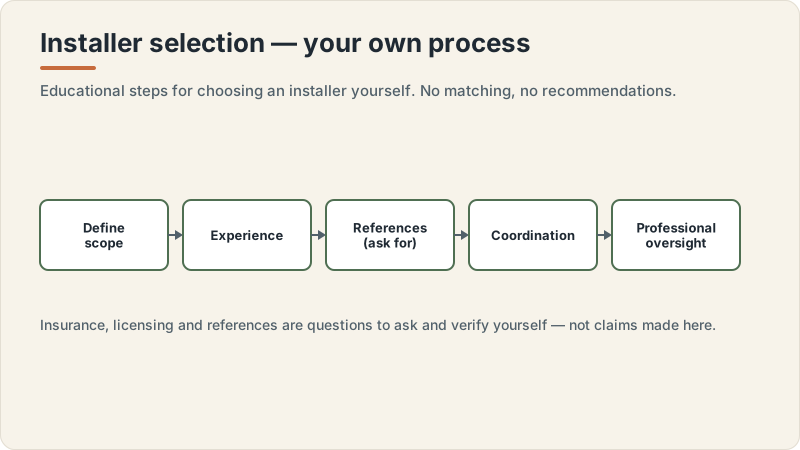
Installer selection process concept
Conceptual editorial diagram — not a construction drawing, specification or to-scale plan. Official court dimensions, standards, drainage, structure and lighting requirements vary by sport, site and location and are confirmed with the relevant federation, supplier and qualified professionals.
What this research helps you prepare
This page helps you prepare your own installer-research process before you engage qualified professionals. It is a preparation resource: a way to organise scope, comparison criteria, experience questions and reference checks so you can evaluate candidates consistently and document why you chose one. It does not select, recommend or vet anyone for you.
Used well, the framework helps you approach every installer with the same brief, recognise vague or evasive answers, and capture what you learn in a form you can revisit. What it cannot do is confirm any figure, requirement or claim. Costs, lead times, availability, insurance and licensing all vary and must be confirmed directly with the installer and relevant authorities.
- A consistent scope to share with every installer you research
- A set of experience and coordination questions to ask
- A structure for capturing references you gather yourself
- A record of how and why a decision was reached
Define a clear, shared scope first
Installers can only be compared fairly when they are responding to the same scope. Describe the court type and intended use, and note your expectations for the surface, enclosure, lighting and drainage, marking clearly where you are seeking the installer's input rather than dictating an answer. An ambiguous scope produces proposals that cannot be compared on equal terms.
Keep that scope identical across everyone you approach, and treat any official dimensions, standards or specifications as items to confirm with the relevant federation, supplier or designer rather than as settled facts. Requirements vary by location and project.
- State the court type, intended use and number of courts
- Note surface, enclosure, lighting and drainage expectations
- Mark where you want the installer's recommendations
- Keep the scope identical for every installer you research
- Flag any standards or dimensions as items to confirm separately
Experience, coordination and site-specific questions
The questions you ask reveal how an installer works. Ask about their experience with comparable court types and conditions, how they would review your specific site, what they include and exclude, how they handle changes, and how they coordinate any specialist trades such as base, drainage, lighting or fencing. Coordination is a common source of risk, so probe who owns the interfaces between trades and what happens when one stage affects another.
Ask how the installer would assess your particular site rather than relying on a generic answer, since conditions such as access, ground, drainage and existing services vary. Treat vague answers, reluctance to put exclusions in writing or unclear coordination boundaries as signals worth recording. Insurance and licensing are things to ask about as questions and confirm independently, never claims this page can make on anyone's behalf.
- Ask about experience with comparable courts and site conditions
- Ask how they would review your specific site
- Ask what is included, what is excluded and who covers gaps
- Ask how specialist trades and interfaces are coordinated
- Ask about insurance and licensing as questions to verify yourself
- Ask how changes and unexpected conditions are handled
References, handoff and documented comparison
Checking references and verifying claims is part of your own due diligence; this page does not verify, vouch for or vet any installer, and you should gather and confirm references yourself. Ask each installer how a project is documented and handed over, including what records, warranties and maintenance guidance you would receive, so you understand the end state as well as the build.
Keep a documented comparison rather than relying on memory. Recording your scope, criteria, questions, answers and reference notes makes the final choice easier to justify and easier to revisit if circumstances change. A documented decision also gives the chosen installer a clearer brief to work from.
- Gather and confirm references yourself, not via this site
- Ask what handoff documentation and records you would receive
- Note how warranties and maintenance guidance are described
- Record comparisons in writing rather than relying on memory
What to ask before comparing options
Before you line installers up against each other, make sure you are comparing like with like. Confirm that every candidate has the same written scope, that you have set your comparison criteria in advance, and that you have prepared a consistent set of questions. Comparing proposals built on different assumptions tends to mislead rather than inform.
Ask yourself what would make one option genuinely better for your situation, and confirm any figure, requirement or timeline an installer mentions directly with them rather than treating it as established. Costs and lead times vary by site, scope, access, drainage, lighting, surface and local conditions.
- Is every installer working from the same written scope?
- Have you set comparison criteria before proposals arrive?
- Have you prepared the same questions for each installer?
- Are exclusions and change handling clear for each option?
- Have you noted any figures or timelines as items to confirm directly?
Questions for qualified professionals
Some questions sit outside what an installer comparison can settle and belong with independent qualified professionals. Use these prompts to decide who to involve and what to confirm before committing. Requirements and treatments vary by location and project, so confirm them with the relevant authority, federation, supplier or adviser.
These are prompts to take into your own conversations, not advice this page can give. Build Design Hub does not provide legal, tax, customs, engineering, design, construction or procurement advice.
- What contract and scope review should an independent adviser carry out?
- Which site, base, drainage, lighting and structural assumptions need professional review?
- What local permissions, zoning or rules apply, and who confirms them?
- How should insurance and licensing claims be verified independently?
- What official dimensions or standards must be confirmed with a federation, supplier or designer?
- Who should review tax, customs or VAT treatment if any element is imported?
What this does not replace
This is an educational project-preparation resource only. It is not a supplier or contractor recommendation, not contractor matching, not an estimate, and not procurement, legal, tax, customs, engineering, design or construction advice. It does not name, rank, rate, verify, endorse, introduce or broker any installer, and nothing here implies that Build Design Hub or HELPERG selects, vets or coordinates work.
Costs, timelines, availability and requirements all vary by site, scope, supplier, access, drainage, lighting, surface, shipping, local conditions and professional requirements, and must be confirmed directly with installers, suppliers, relevant authorities and qualified professionals. Consult qualified professionals before making any project, legal, tax, customs, engineering, construction or procurement decision. HELPERG LLC is the publisher and operator only.
Installer research and selection checklist
- 1Have you written one clear scope and shared it with every installer?
- 2Have you set your comparison criteria before any proposal arrives?
- 3Have you prepared consistent experience and coordination questions?
- 4Have you asked how each installer would review your specific site?
- 5Have you asked what is included, excluded and who covers any gaps?
- 6Have you asked about insurance and licensing as questions to verify yourself?
- 7Have you gathered and confirmed references yourself?
- 8Have you asked what handoff documentation and warranties you would receive?
- 9Have you noted any costs, timelines or requirements as items to confirm directly?
- 10Have you documented the comparison rather than relying on memory?
- 11Have you identified which assumptions need qualified professional review?
- 12Have you sought independent advice before committing to anyone?
Common mistakes to avoid
- Approaching installers with an inconsistent or vague scope so proposals cannot be compared
- Letting one headline impression dominate the decision instead of balanced criteria
- Skipping reference checks or assuming this site has verified anyone for you
- Treating an installer's stated costs, timelines or availability as fixed rather than confirming them directly
- Leaving coordination boundaries between trades unclear so interface risk is missed
- Assuming insurance or licensing is in place rather than asking and verifying it yourself
- Failing to clarify exclusions and change handling before committing
- Choosing without documenting how and why the decision was reached
When to involve a professional
- Seek independent advice on contracts and technical scope before committing to any installer, as terms and responsibilities vary.
- Have qualified professionals review site, base, drainage, lighting and structural assumptions, which vary by site and project.
- Confirm local permissions, zoning and rules affecting the works with the appropriate authorities, as requirements vary by location.
- Verify any insurance and licensing claims independently rather than relying on statements made during research.
- Confirm official court dimensions and standards with the relevant federation, supplier or designer before finalising scope.
- Consult appropriate advisers on any tax, customs or VAT treatment if part of the project involves imported elements.
Frequently asked questions
Questions readers ask about this topic
Which installer do you recommend?
We do not recommend, rank, rate, verify or introduce installers. Build Design Hub publishes educational project-preparation content only, and HELPERG LLC is publisher and operator only. Selecting an installer is your decision, ideally informed by independent advice and your own verification.
How do I compare installers fairly?
Give every installer the same written scope and set your comparison criteria before proposals arrive. Documenting both keeps the comparison consistent and the decision easier to justify. Confirm any figure or timeline an installer mentions directly with them.
What questions reveal the most about an installer?
Questions about relevant experience, how they would review your specific site, what they include and exclude, how they handle changes and how they coordinate specialist trades tend to be revealing. Vague or evasive answers are themselves a useful signal to record.
Should I ask about insurance and licensing?
Yes, treat insurance and licensing as questions to ask and then verify independently. We cannot and do not confirm anyone's insurance, licensing or credentials, so checking these yourself with the relevant sources is part of your own due diligence.
Can you tell me what installation will cost or how long it takes?
No. Costs and timelines vary by site, scope, access, drainage, lighting, surface, local conditions and professional requirements. We do not provide figures or estimates. Confirm costs and timelines directly with installers and qualified professionals.
Keep reading