
Who this guide is for
- Prospective court owners or operators comparing a single turnkey arrangement against splitting work across separate suppliers and contractors
- Anyone preparing their own research before requesting quotes, so they can spot where responsibilities might meet or fall between parties
- Readers who want a structured way to record handoffs, sequencing assumptions and warranty questions to raise with each party
- People assembling questions for qualified professionals about coordination, responsibility boundaries and documentation
- Owners who want a calm preparation habit for thinking about interface risk, not a recommendation about which delivery model to choose
Planning diagram
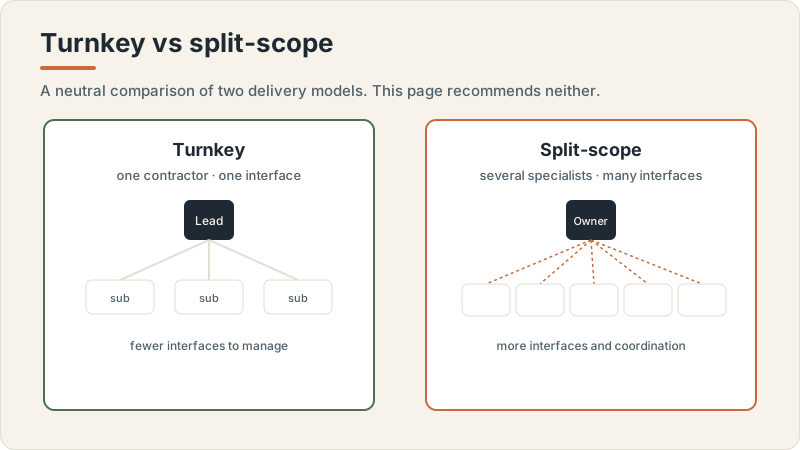
Turnkey vs split-scope concept
Conceptual editorial diagram — not a construction drawing, specification or to-scale plan. Official court dimensions, standards, drainage, structure and lighting requirements vary by sport, site and location and are confirmed with the relevant federation, supplier and qualified professionals.
What this research helps you prepare
This resource helps you build your own picture of where one party's scope is likely to meet another's, so you can ask better questions before committing to any delivery model. It is a thinking and documentation aid, not a plan, specification or estimate. The aim is to turn vague handoff areas into a written list of points you can raise directly with each supplier, contractor and qualified professional.
An interface is simply a boundary where work, materials, information or responsibility passes from one party to another. Examples might include the boundary between base or groundworks and the surface that sits on it, between drainage provision and the finished playing area, or between an electrical supply and lighting installation. This page does not tell you how any of that work should be done; it helps you prepare questions about who is responsible for what, and where gaps could appear.
Use it to draft a list of interfaces relevant to your own project, note your assumptions, and mark which points you still need to confirm. The factual answers belong to the suppliers, contractors, authorities and qualified professionals you engage, not to this resource.
- Identify likely boundaries between trades and suppliers on your own project
- Turn unclear handoffs into written questions you can ask each party
- Record assumptions about sequencing and coordination that need confirming
- Prepare a documentation habit that supports clearer conversations later
Mapping responsibility boundaries and handoffs
A useful starting habit is to list the broad stages or work packages your project might involve and then look at the joins between them. At each join, the questions are similar: who delivers the work on each side, who is responsible for the point where they meet, what information has to pass between the parties, and in what order the work needs to happen. Because every site and scope differs, the right set of stages for your project is something to confirm with qualified professionals rather than assume from a generic list.
Whether you choose a turnkey arrangement or separate parties changes who answers these questions, not whether the questions matter. Under a single arrangement, one party may describe how it manages internal handoffs; under a split-scope approach, you may be coordinating between parties yourself or relying on a designated coordinator. Neither model is presented here as better. What matters for your preparation is that you can see the interfaces clearly and know which party you would ask about each one.
As you map boundaries, keep your notes as open questions rather than conclusions. A line such as who confirms the base is ready before surfacing begins is a question to put to the relevant parties, not a requirement this page can state. Requirements and accepted practice vary by location, surface, sport and supplier, and must be confirmed with the relevant authorities, federations, suppliers and qualified professionals.
- List the broad work stages your project may involve, then examine the joins
- For each join, note who is on each side and who owns the meeting point
- Record what information has to pass between parties at each handoff
- Treat every boundary note as a question to confirm, never a settled fact
Coordination, communication and the documentation trail
Interface risk is often less about the work itself and more about how parties communicate around it. A simple preparation step is to think about how you would want decisions, approvals and changes recorded so that, if a question arises later, there is a written trail. This is a planning habit you bring to your own project; it is not a contractual instruction, and the actual arrangements should be agreed with the parties you engage and reviewed by qualified professionals.
Consider how you would log who confirmed what and when, how changes to scope would be captured, and how you would keep a single shared view of what each party has agreed to deliver. Warranty boundaries are worth raising here as a question rather than an assumption: it can be useful to ask each party where their responsibility is described as ending, and how that relates to adjoining work, so you understand the picture before you decide anything. This page makes no claim about how warranties work; that is something to confirm directly with each supplier or contractor and to review with a qualified professional.
A clear, consistent record supports dispute prevention because it reduces the room for differing recollections. It does not replace formal agreements or professional review, and it is not legal advice. The purpose here is only to help you arrive at conversations organised, with your own questions written down.
- Decide how you want decisions, approvals and changes recorded on your project
- Keep a single shared view of what each party has agreed to deliver
- Raise warranty boundaries as a question to each party, not an assumption
- Treat the documentation trail as preparation support, not a substitute for agreements
What to ask before comparing options
Before you compare any quotes, delivery models or suppliers, it helps to standardise the interface questions you will ask everyone, so answers are comparable rather than a patchwork. The goal is consistency in your own research, not a judgement about who is better. Ask the same boundary, sequencing and responsibility questions of each party and write the answers in the same structure.
Useful preparation questions are open and factual. They focus on who is responsible at each handoff, how coordination is described, where one party says its scope ends, and what would happen if something at a boundary is unclear. Keep cost, time and availability framed as things that vary and must be confirmed directly; do not try to pin down figures from this page, because none are provided and any figure should come from the supplier or contractor and be reviewed by a qualified professional.
Recording answers in a comparison structure that you fill in yourself keeps the exercise neutral. The structure organises your research; it does not rank, score or recommend anyone, and Build Design Hub does not verify or endorse any party you contact.
- Ask every party the same boundary and responsibility questions
- Note where each party describes its scope as ending, and what sits beyond it
- Ask how coordination and sequencing are handled, without assuming an answer
- Frame cost, timing and availability as items to confirm directly, never as figures here
- Record responses in your own comparison structure rather than as endorsements
Questions for qualified professionals
Some interface questions are best directed to qualified professionals rather than to suppliers alone, because they touch on responsibility, coordination and review that sit outside a single trade. Preparing these questions in advance helps you make the most of professional input. This page cannot tell you which professionals your project needs or what the answers are; those depend on your location, scope and circumstances and should be confirmed with the professionals themselves.
Open questions you might prepare include how interface risks could be identified for a project like yours, how responsibility boundaries between trades are typically documented, what coordination or oversight might be appropriate, and what records they would expect to see kept. You can also ask how warranty and responsibility boundaries should be reviewed, recognising that this is a professional and contractual matter, not something this resource can state.
Treat the professionals' guidance as the authoritative input. The role of this page is only to help you turn your interface concerns into clear questions before those conversations begin.
- How could interface and handoff risks be identified for a project like mine?
- How are responsibility boundaries between trades usually documented and reviewed?
- What coordination or oversight arrangements might be appropriate for my scope?
- What records and approvals would you expect to be kept across handoffs?
- How should warranty and responsibility boundaries be reviewed before I commit?
What this does not replace
This page is an educational project-preparation resource only. It is not a supplier or contractor recommendation, not contractor matching, and not an introduction, ranking, rating or endorsement of any party. Build Design Hub and HELPERG LLC do not verify, rank, recommend, certify, design, build, manage, estimate or advise on sports-court projects, suppliers or contractors. HELPERG LLC is the publisher and operator only.
It is not an estimate and contains no prices, cost ranges, timelines, lead times, availability figures or other numbers, because requirements and costs vary by site, scope, supplier, access, drainage, lighting, surface, shipping, local conditions and professional requirements, and must be confirmed directly with suppliers, authorities, federations and qualified professionals. Nothing here favours a turnkey or a split-scope model over the other.
It is not procurement, legal, tax, customs, engineering, architecture, design, construction or safety advice, and it is not a substitute for qualified professional review. Always consult qualified professionals before making project, legal, tax, customs, engineering, construction or procurement decisions.
Interface risk preparation worksheet
- 1List the broad work stages your project may involve and mark the joins between them
- 2For each join, write who is on each side and who you would ask about the meeting point
- 3Note what information or approval has to pass between parties at each handoff
- 4Record your sequencing assumptions and flag which ones still need confirming
- 5Write the same boundary and responsibility questions to ask every party
- 6For each party, note where they describe their scope as ending
- 7Draft warranty-boundary questions to raise with each party, as questions not assumptions
- 8Decide how you will record decisions, approvals and scope changes for your project
- 9Mark every cost, timing or availability point as confirm directly, with no figures entered
- 10List the interface questions you will take to qualified professionals
- 11Keep a single shared view of what each party has agreed to deliver
- 12Review your completed worksheet with qualified professionals before deciding anything
Common mistakes to avoid
- Assuming a handoff is covered by someone without confirming who is actually responsible
- Treating boundary notes as settled facts instead of questions to confirm with each party
- Letting cost, timing or availability creep in as assumed figures rather than items to verify directly
- Comparing parties on different questions, so the answers cannot be lined up fairly
- Deciding a delivery model is better in general rather than for your own specific situation
- Skipping a written record of approvals and changes, leaving only differing recollections later
- Reading warranty coverage as understood instead of asking each party where responsibility ends
- Substituting this preparation worksheet for qualified professional review and formal agreements
When to involve a professional
- Involve qualified professionals to help identify which interface and handoff risks apply to your specific project
- Seek professional input on how responsibility boundaries between trades should be documented and reviewed
- Ask professionals about appropriate coordination or oversight for your scope, since this varies by location and project
- Have warranty and responsibility boundaries reviewed by qualified professionals before you commit to any party or model
- Consult qualified professionals before making any project, legal, tax, customs, engineering, construction or procurement decision
- Remember Build Design Hub does not recommend, verify or introduce suppliers or contractors; HELPERG LLC is publisher and operator only
Frequently asked questions
Questions readers ask about this topic
Does this page tell me whether turnkey or split scope is better?
No. It deliberately does not favour either delivery model. It helps you map where responsibilities might meet so you can prepare your own questions, then confirm what suits your situation with qualified professionals. The right choice depends on your project and circumstances.
Can you tell me who is responsible at each handoff on my project?
No. Responsibility at each boundary is something to confirm directly with the parties you engage and to review with qualified professionals. This page only helps you turn each handoff into a clear written question to ask, not an answer it can provide.
How are warranty boundaries handled across different trades?
That is a question to put to each supplier or contractor and to review with a qualified professional, not something this resource can state. We suggest treating warranty boundaries as questions to raise, since they vary by party, scope and location.
Will this give me prices or timelines for coordinating trades?
No. There are no figures here. Costs, sequencing and timelines vary by site, scope, supplier, access and local conditions, and must be confirmed directly with suppliers and qualified professionals. This page only helps you prepare what to ask.
Does Build Design Hub recommend or introduce contractors to manage interfaces?
No. Build Design Hub does not recommend, rank, verify, match or introduce any supplier or contractor. HELPERG LLC is the publisher and operator only. This is an educational preparation resource for your own research.
Keep reading