
Who this guide is for
- Community groups, clubs or trusts exploring a shared indoor sports hall and needing to organise goals before engaging professionals
- Schools and education teams preparing a brief for a sports hall used across timetabled, community and club sessions
- Municipalities, parish and local authority officers scoping a public leisure or multi-use hall project
- Property developers and project teams assembling an owner-side brief for a mixed-user indoor facility
- Facility managers and operations leads mapping how a proposed hall will be scheduled, staffed and maintained
- Trustees, boards and volunteer committees who must document stakeholder input before commissioning design work
Planning diagram
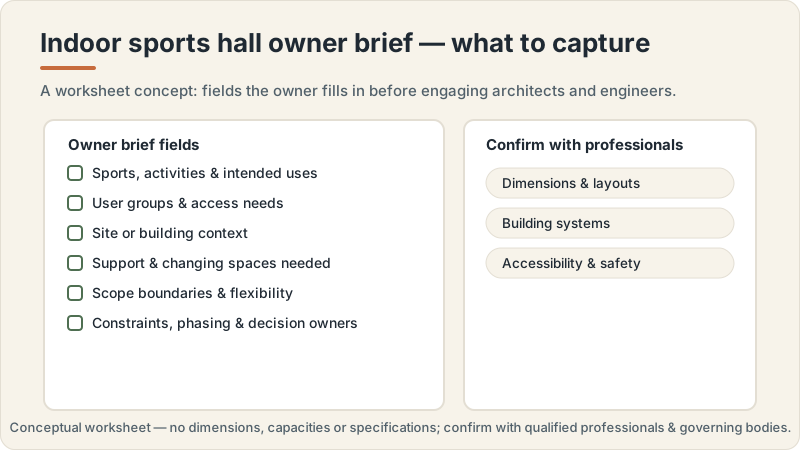
Indoor sports hall owner brief worksheet concept
Conceptual editorial diagram — not a construction drawing, specification, to-scale plan or proof of a real project. It is not engineering, structural, fire/life-safety, crowd-safety or accessibility-compliance guidance. Capacities, dimensions, standards, requirements and costs vary by facility type, audience, site, use case and governing body, and are confirmed with qualified professionals, relevant authorities and governing bodies. Build Design Hub does not design, build, inspect, certify, recommend or match anyone.
What this guide helps you prepare
This guide helps you turn a broad idea, such as "the community needs an indoor sports hall," into an organised owner-side brief that qualified professionals can respond to. It focuses on the preparation that sits before design: defining who the hall is for, which activities and user groups it must balance, how it should operate across a typical week, and what questions and documents you will bring to architects, engineers, accessibility specialists, operators and your governing body. It deliberately stops at the point where design, engineering, compliance or certification begins, because those judgements belong to appropriately qualified people and to the relevant authorities.
Think of the output as four connected artefacts: a project brief that records goals and constraints, a stakeholder map that captures who must be consulted, a prioritised question list for professional meetings, and a documentation-request list so you know what evidence and drawings to ask for. None of these contain requirements, dimensions, capacities or costs as settled facts. Every such figure is treated as a question to confirm, because requirements vary by location, facility type, use case, governing body, owner, site, authority, professional team and project scope.
- Record the core purpose of the hall and the primary problem it is meant to solve for the community
- List the user groups and activities it must accommodate, noting which are essential versus aspirational
- Capture known constraints (site, existing buildings, access, neighbours) as facts to verify, not assumptions
- Draft the open questions you cannot answer yourself and route them to the right professional or authority
- Assemble a documentation-request list: what drawings, reports, statements and confirmations you will need
- Note explicitly which decisions you believe belong to professionals rather than to the owner
Balancing multiple users, activities and stakeholders
A community sports hall rarely serves one sport or one group. It may host school sessions, club training, casual bookings, events and community activities, often in the same week and sometimes in the same space. Preparing well means understanding these competing demands before design begins, because they shape almost every later conversation about layout, scheduling, storage, support rooms and operations. The owner's job at this stage is not to resolve technical trade-offs but to document them clearly: who needs what, when, and which needs sit in tension. This gives professionals an honest picture of the brief rather than a single-user simplification that unravels later.
Stakeholder engagement is the mechanism for surfacing this picture fairly. That includes obvious groups such as clubs, schools and regular hirers, and less obvious ones such as neighbours, accessibility user groups, operations and cleaning staff, and the people who will manage bookings and safeguarding. Capturing their input in a structured register, and noting where views conflict, helps you frame balanced questions for professionals rather than presenting one group's wishes as settled requirements. Where a stakeholder asserts a specific figure, capacity or standard, treat it as a claim to verify with the governing body or a qualified professional, not as a fixed requirement to design around.
- Map every intended user group and the activities each expects the hall to support
- Identify where user needs conflict (scheduling overlaps, storage, noise, floor use) and record the tensions
- Include operational stakeholders early: cleaning, maintenance, bookings, safeguarding and reception staff
- List external stakeholders such as neighbours and community groups whose input may shape the brief
- Note which activities have their own governing bodies whose guidance must be confirmed with them directly
- Record disputed figures or 'standards' cited by stakeholders as items to verify, never as fixed requirements
Accessibility and operational questions to frame early
Accessibility and day-to-day operations are easiest to get right when they are considered from the very start of the brief, not retrofitted later. On the owner side, this does not mean deciding accessibility solutions or interpreting compliance yourself; it means gathering the information a qualified accessibility professional will need, and recording the user perspectives that should inform their work. Consider the full journey through the facility: arriving, entering, moving between spaces, using changing and support rooms, spectating and leaving. Documenting who will use the hall and how helps the professional advise on an inclusive brief, while any statement about what is required or compliant must come from that professional and the relevant authority, not from this guide.
Operations planning runs in parallel. A hall that is well designed but hard to schedule, clean, secure or maintain will frustrate its community. Preparing means thinking through how the building will actually run once handed over: who opens and closes it, how bookings and access are controlled, how equipment is stored and moved, how cleaning and maintenance fit around use, and how support spaces are managed. These are owner-side questions you can begin to structure now, then confirm with professionals, operators and manufacturers. As with everything else, avoid fixing figures such as capacities, setpoints or cleaning intervals as facts; frame them as questions and request the supporting documentation.
- Describe the full user journey (arrival, entry, movement, changing, spectating, exit) as questions for an accessibility professional
- Record which user groups may have specific access needs so the brief reflects real users, not assumptions
- List operational routines (opening, closing, access control, safeguarding) the hall must support day to day
- Ask how equipment storage, movement and setup between activities should be planned and by whom
- Note the maintenance, cleaning and inspection access the operator will need, to confirm with professionals
- Request that any accessibility or operational figure be confirmed in writing by the responsible professional or authority
Planning questions before speaking with professionals
Before you sit down with architects, engineers, accessibility specialists or operators, it helps to answer the questions only you and your stakeholders can answer, and to clearly flag the ones you cannot. This section is about self-preparation: clarifying purpose, users, constraints, operations and success criteria so professional time is spent on judgement rather than on discovering your brief. The stronger this preparation, the more useful and comparable the responses you receive will be. None of these questions require you to state a requirement or specification; they are about articulating goals and organising what you know and do not know.
Work through these with your stakeholder group and write the answers down, even where the answer is "unknown, to confirm." Recording an open question is as valuable as recording a settled one, because it tells professionals exactly where their input is needed. Keep every quantitative or regulatory point on the "to confirm" side of the line: capacities, dimensions, clearances, systems, standards and timelines are not owner decisions and should be routed to the right professional or authority.
- What is the single clearest purpose of this hall, and how will we know it is meeting it?
- Which user groups and activities are essential, which are optional, and where do they conflict?
- What do we already know about the site and existing constraints, and what is still unverified?
- How do we intend the hall to be operated, scheduled, secured and maintained after handover?
- Which questions are genuinely ours to answer, and which must go to a professional or authority?
- What documentation, drawings and written confirmations will we need to request and keep on file?
Questions for qualified professionals
Once your brief is organised, this section helps you structure what to ask the professionals and authorities you engage, and what documentation to request from each. The goal is not to obtain answers you can act on unilaterally, but to understand the scope of each professional's role, the assumptions behind their advice, and the records you should keep. Keep questions open and evidence-focused: ask what governs a decision, what needs confirming with an authority or governing body, and what written statements or drawings you should hold. Avoid asking them to validate a figure you have assumed; instead ask them to establish the figure and its basis.
Use the same discipline when comparing responses from different professionals or suppliers. Ask each to state their scope, exclusions, assumptions and the documentation they will provide, so that you can compare like with like rather than comparing incomplete pictures. Remember that Build Design Hub does not design, engineer, inspect, certify, recommend, rank, verify or match any of these professionals; this guide only helps you prepare the questions and the records-request list you bring to the qualified people you choose to engage.
- What is the full scope of your role here, and what falls outside it or needs another specialist?
- Which requirements, standards or approvals apply to this project, and which authority or governing body confirms them?
- What assumptions is your advice based on, and how would changes to our brief affect them?
- What drawings, reports, statements and confirmations will you provide, and at which stages?
- How should accessibility, building systems and safety matters be handled, and who is responsible for each?
- What should we request in writing from suppliers or other consultants so we can compare proposals fairly?
What this does not replace
This is an educational planning resource only. It is not an indoor sports facility construction manual and not structural or architectural design, HVAC/ventilation, lighting or acoustic engineering, fire or life-safety, or accessibility-compliance advice, and it is not permit, zoning, inspection, certification, legal, tax, insurance or procurement advice. It does not design, build, engineer, specify, size, certify, inspect or approve anything, gives no capacities, dimensions, clearances, lux, air-change rates, acoustic or temperature thresholds, revenue, ROI or costs, and offers no warranty interpretation or estimate. Requirements, standards, capacities and costs vary by location, facility type, use case, governing body, owner, site, authority, professional team and project scope, and are confirmed with qualified professionals, relevant authorities and governing bodies.
Build Design Hub does not design, build, engineer, inspect, certify, recommend, rank, verify, introduce, broker or match suppliers, contractors, consultants or professionals, and HELPERG LLC is publisher/operator only. Use this resource to prepare your own thinking and briefs, then have the qualified professionals you engage directly — architects, structural and building-services engineers, lighting, acoustic, accessibility and fire/life-safety specialists, and legal or procurement advisors where appropriate — review your project. Decisions about design, engineering, systems, safety, accessibility, compliance, capacity, procurement and cost must rest on those professionals, the relevant authorities and the governing bodies for your sport and location.
- Not an indoor sports facility construction manual and not structural or architectural design
- Not HVAC/ventilation, lighting or acoustic engineering, fire/life-safety or accessibility-compliance advice
- Not permit/zoning, inspection, certification, warranty-interpretation, legal, tax, insurance or procurement advice
- Not a supplier, contractor, consultant or professional recommendation, ranking, directory or matching service
- Not an estimate and gives no capacity, dimension, system-performance, revenue, ROI or cost figures — requirements and costs vary
- Qualified professional review is required before any indoor sports facility project decision
Community sports hall preparation worksheet
- 1Record the hall's core purpose and the community problem it is intended to address
- 2List every intended user group and the activities each expects the hall to support
- 3Mark which activities and users are essential versus aspirational, and note conflicts between them
- 4Build a stakeholder register covering clubs, schools, hirers, operators, neighbours and staff
- 5Capture each activity's governing body so their guidance can be confirmed with them directly
- 6Document known site and existing-building constraints as items to verify, not as facts
- 7Describe the intended user journey through the hall as questions for an accessibility professional
- 8Note the operational routines the hall must support (opening, access control, bookings, safeguarding)
- 9List equipment storage, movement and changeover needs to raise with professionals and operators
- 10Record maintenance, cleaning and inspection access the operator will require
- 11Draft the open questions you cannot answer and assign each to a professional or authority
- 12Assemble a documentation-request list of drawings, reports and written confirmations to obtain
- 13Prepare a like-for-like comparison structure asking each professional or supplier for scope, exclusions and assumptions
- 14Flag every capacity, dimension, standard, cost or timeline as 'to confirm with a qualified professional'
Common mistakes to avoid
- Treating a dimension, capacity, clearance or usage figure as fixed instead of confirming it with a qualified professional and the relevant authority
- Assuming requirements, codes or standards apply without verifying them for your location, facility type and use case
- Designing the brief around one dominant user group and discovering the multi-user conflicts too late
- Treating a building-system, structural or accessibility decision as the owner's rather than the responsible professional's
- Skipping professional and authority review because a step 'looks simple' or was cited confidently by a stakeholder
- Accepting a figure or 'standard' quoted by a hirer or club as a requirement without confirming it with the governing body
- Leaving operations, maintenance and cleaning access out of the brief until after design is settled
- Comparing professional or supplier proposals without first asking each for scope, exclusions and assumptions
When to involve a professional
- When any structural, layout, building-system or site decision is involved, engage the appropriate qualified professional rather than resolving it in the brief
- When accessibility is being considered, involve a qualified accessibility specialist and confirm anything described as required with them and the relevant authority
- When questions touch permits, codes, zoning or approvals, confirm the position with the relevant authority before assuming anything
- When lighting, ventilation, acoustics, temperature or safety matters arise, route them to the responsible professional as design and compliance questions, not owner decisions
- When a governing body's guidance may apply to an activity, confirm it directly with that governing body
- When comparing proposals or contracts, seek appropriate legal, insurance or procurement advice rather than interpreting terms yourself
Frequently asked questions
Questions readers ask about this topic
Does Build Design Hub design, build or certify the sports hall, or design its lighting, ventilation or acoustics?
No. Build Design Hub is an educational planning resource operated by HELPERG LLC. It does not design, build, engineer, inspect or certify facilities, and it does not design HVAC, lighting, acoustic, structural or fire-safety systems. It does not recommend, rank, verify, introduce or match suppliers, contractors or professionals, and it provides no capacities, dimensions, costs or requirements. This guide only helps you prepare questions and documentation for the qualified professionals and authorities you choose to engage.
Can this guide tell me how big the hall should be or how many users it can hold?
No. Sizes, capacities, clearances and similar figures depend on your location, facility type, use cases, governing body, site, authority, professional team and project scope. This guide deliberately gives no such figures. Treat every dimension or capacity as a question to confirm with qualified professionals and the relevant authorities, and record their written confirmation rather than any number assumed during planning.
How should I handle accessibility in the brief?
Prepare by documenting who will use the hall and how they will move through it, and by recording the user perspectives that should inform an inclusive brief. This guide does not provide accessibility requirements or compliance claims. Any statement about what is required or compliant must come from a qualified accessibility professional and the relevant authority, so frame accessibility as questions and requested documentation for that specialist.
What is the best way to compare responses from different professionals or suppliers?
Ask each one, in writing, to state their scope, exclusions, assumptions and the documentation they will provide, so you are comparing like with like. This guide helps you structure that comparison, but it does not evaluate, rank, verify or recommend any professional or supplier. The choice, and the verification of their credentials and advice, remains yours to make with appropriate professional input.
Keep reading