
Who this guide is for
- Sports clubs planning a dedicated indoor hall for single-sport or club training
- Schools, colleges and universities scoping an indoor sports or training space
- Municipalities and community bodies preparing a shared indoor facility brief
- Developers evaluating an indoor hall within a wider scheme or building
- Facility managers assembling a brief before engaging professional advisers
- Project sponsors organising stakeholders and goals before any design begins
Planning diagram
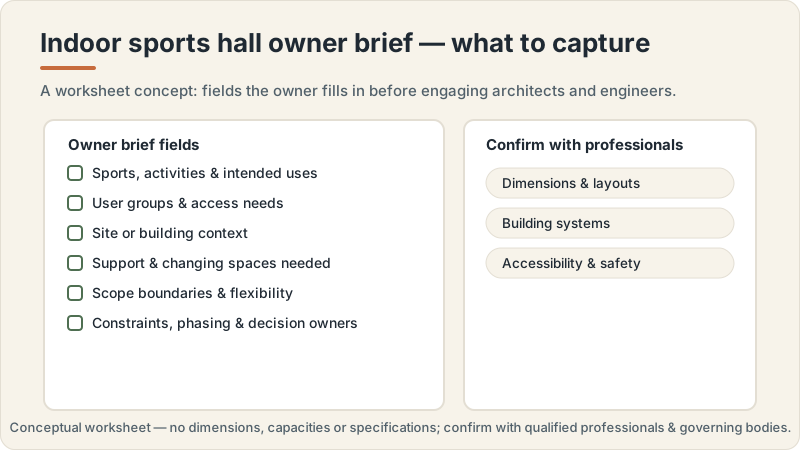
Indoor sports hall owner brief worksheet concept
Conceptual editorial diagram — not a construction drawing, specification, to-scale plan or proof of a real project. It is not engineering, structural, fire/life-safety, crowd-safety or accessibility-compliance guidance. Capacities, dimensions, standards, requirements and costs vary by facility type, audience, site, use case and governing body, and are confirmed with qualified professionals, relevant authorities and governing bodies. Build Design Hub does not design, build, inspect, certify, recommend or match anyone.
What this guide helps you prepare
This guide helps you assemble the raw material an owner needs before engaging a professional team for an indoor training hall: a plain statement of why the hall is needed, an honest description of how it will be used through a typical week, a first view of the support spaces that surround the playing area, and a defined boundary around what the project includes and excludes. These are preparation artefacts you create and refine, not technical decisions you make alone. The clearer they are, the more focused your conversations with architects, engineers, planners and other advisers will be, and the easier it becomes to compare proposals against a consistent brief.
It is equally important to be clear about what this guide does not do. It does not tell you how large the hall should be, what clearances or run-offs apply, how many people it can hold, how it should be ventilated, lit, heated or acoustically treated, what it should cost, or how to satisfy any code, standard, approval or accessibility requirement. All of those are determined by your professional team, the relevant authorities and the governing body for the sport or use in question, and they vary by location, facility type, use case, site and owner. Your role at this stage is to prepare good questions and a good brief, not to supply answers that belong to qualified professionals.
- Write a short, plain statement of why an indoor hall is needed and what success would look like
- Describe the intended primary sport or activity and any realistic secondary uses
- Note the user groups the hall is meant to serve and the times they would use it
- List the constraints you already know about, such as an existing building, site or budget context
- Record the open questions you cannot answer yourself and will need to route to professionals
- Capture assumptions explicitly so they can be tested rather than carried forward unchecked
Describing the use pattern for a training hall
The use pattern is the single most useful thing an owner can describe before design begins, and for a training hall it is often more revealing than any headline figure. A hall used mainly for one club's weekday evening training is a different project from one shared between school lessons, community bookings and weekend sessions, even if both are called an indoor hall. Try to describe a realistic week: which groups train when, whether sessions overlap or run back to back, how the space is set up and reset between them, and where the quiet and busy periods fall. Resist fixing figures such as floor size, court markings, ceiling clearance or occupant numbers at this stage; treat those as questions to confirm with qualified professionals once the pattern of use is clear.
A candid use pattern also surfaces the trade-offs that shape everything downstream. Single-sport training focused on one club allows a tighter, more specialised brief, while multi-use ambitions ask more of the space, the support rooms and the way the hall is booked and managed. Being honest about how mixed the use really is, and about which activities are core versus occasional, helps professionals advise on what your particular hall needs rather than designing for an average that fits no one. The goal here is an accurate picture of demand and rhythm, not a set of specifications; any capacity, dimension or scheduling implication is for your professional team and the relevant governing body to confirm.
- Which sport or activity is the hall primarily for, and which uses are secondary or occasional?
- Who trains or plays here across a typical week, and at what times of day and days of week?
- Do sessions run back to back, overlap, or leave gaps for setup and reset between groups?
- How is the space configured and changed between different activities or user groups?
- Is the hall for one club's training, or shared across school, community and casual use?
- Which uses are genuinely core, and which are aspirations to confirm with professionals later?
Support spaces and adjacencies around the hall
The playing area is only part of a training hall; the support spaces around it often determine whether the facility works day to day. Changing and washing areas, storage for equipment and mobile fittings, a reception or entry point, spectator or waiting space, first-aid and staff areas, and circulation between them all shape how smoothly sessions run and reset. At the brief stage your job is to list the support functions your use pattern implies and to think about how they relate to one another and to the hall, not to size or specify any of them. How much of each is needed, and how it must be arranged, is a matter for qualified professionals, the relevant authorities and the governing body for your intended use.
Adjacency and flow deserve early attention because they are cheap to think about now and expensive to change later. Consider how a group arrives, changes, moves to the hall, and leaves, and where equipment is stored and moved without crossing an active session. Consider separate or shared entrances for different user groups, and how the hall connects to any wider building it sits within. Describe these relationships as goals and questions rather than layouts: you are telling professionals what needs to work, and leaving them to determine whether and how it can be achieved for your site, use case and the requirements that apply.
- Which support spaces does your use pattern imply, such as changing, storage, entry and waiting areas?
- How should users flow from arrival, to changing, to the hall, and out again?
- Where and how is equipment stored, and how is it moved without crossing active sessions?
- Do different user groups need separate or shared entrances, changing or waiting areas?
- How does the hall connect to any wider building, and what does it share with other spaces?
- Which support-space and accessibility requirements will you confirm with qualified professionals?
Planning questions before speaking with professionals
Before you engage architects, engineers or other advisers, it pays to organise what you already know and what you still need to learn. Working through your own questions first means the professional conversations start further along and stay focused on substance. Capture your goals, use pattern, support-space needs, constraints and open questions in writing, and be candid about the assumptions you are making so they can be tested rather than quietly accepted. This preparation also makes it far easier to compare proposals later, because everyone is responding to the same clearly stated brief.
These questions are prompts to clarify your own thinking, not a checklist to satisfy, and none should be answered with a fixed figure, dimension, capacity or requirement at this stage. Anything touching floor size, clearances, occupancy, ventilation, lighting, heating, acoustics, safety, accessibility, codes or approvals is something to confirm with qualified professionals, the relevant authorities and the governing body for your use case, all of which vary by location, facility type, use case, site and owner.
- Can you state the hall's purpose and intended use in a few plain sentences?
- Have you described a realistic week of use, including who trains when and how sessions reset?
- Have you listed the support spaces your use pattern implies, without trying to size them?
- Have you defined what is in and out of scope, including any existing building or site context?
- Have you written down assumptions and open questions to test with professionals?
- Have you noted which authorities and governing bodies you may need to consult, without assuming their answers?
Questions for qualified professionals
When you reach the point of engaging a professional team, the most valuable thing you can bring is good questions framed against a clear brief. The questions below are examples of what owners commonly need professionals, authorities and governing bodies to confirm for an indoor hall; they are deliberately open, because the answers depend entirely on your specific location, site, use pattern, user groups and the bodies that have jurisdiction. Asking them helps you understand what your project genuinely requires rather than guessing, and it surfaces issues early, while they are still inexpensive to address.
Use the responses to inform your planning, not as a substitute for formal advice or approval. This guide does not provide dimensions, clearances, capacities, ventilation, lighting, acoustic or accessibility requirements, costs or design, and it does not recommend, rank, verify, introduce or match any supplier or contractor. Ask professionals what documentation they will provide, and keep a record of what you are told so your brief stays accurate as the project develops and so you can compare proposals on a consistent basis.
- What approvals, consultations or governing-body engagements will this intended use likely require?
- Which professional disciplines should be involved for the hall and its building systems, and when?
- What should we ask about ventilation, lighting, heating and acoustics, and what documentation will you provide?
- What space, clearance, occupancy and accessibility factors should shape our brief for this use?
- How would you advise structuring the project into phases and decision points for a hall like this?
- What information should we gather now so proposals can be compared on a consistent basis?
What this does not replace
This is an educational planning resource only. It is not an indoor sports facility construction manual and not structural or architectural design, HVAC/ventilation, lighting or acoustic engineering, fire or life-safety, or accessibility-compliance advice, and it is not permit, zoning, inspection, certification, legal, tax, insurance or procurement advice. It does not design, build, engineer, specify, size, certify, inspect or approve anything, gives no capacities, dimensions, clearances, lux, air-change rates, acoustic or temperature thresholds, revenue, ROI or costs, and offers no warranty interpretation or estimate. Requirements, standards, capacities and costs vary by location, facility type, use case, governing body, owner, site, authority, professional team and project scope, and are confirmed with qualified professionals, relevant authorities and governing bodies.
Build Design Hub does not design, build, engineer, inspect, certify, recommend, rank, verify, introduce, broker or match suppliers, contractors, consultants or professionals, and HELPERG LLC is publisher/operator only. Use this resource to prepare your own thinking and briefs, then have the qualified professionals you engage directly — architects, structural and building-services engineers, lighting, acoustic, accessibility and fire/life-safety specialists, and legal or procurement advisors where appropriate — review your project. Decisions about design, engineering, systems, safety, accessibility, compliance, capacity, procurement and cost must rest on those professionals, the relevant authorities and the governing bodies for your sport and location.
- Not an indoor sports facility construction manual and not structural or architectural design
- Not HVAC/ventilation, lighting or acoustic engineering, fire/life-safety or accessibility-compliance advice
- Not permit/zoning, inspection, certification, warranty-interpretation, legal, tax, insurance or procurement advice
- Not a supplier, contractor, consultant or professional recommendation, ranking, directory or matching service
- Not an estimate and gives no capacity, dimension, system-performance, revenue, ROI or cost figures — requirements and costs vary
- Qualified professional review is required before any indoor sports facility project decision
Indoor training hall preparation worksheet
- 1Write a plain statement of why the hall is needed and what success would look like
- 2Describe the primary sport or activity and any realistic secondary uses
- 3Map a realistic week of use, noting which groups train at which times
- 4Record whether sessions overlap or run back to back, and how the space resets between them
- 5Note whether the hall is for one club's training or shared across school, community and casual use
- 6List the support spaces your use pattern implies, such as changing, storage, entry and waiting areas
- 7Describe the flow from arrival, to changing, to the hall, and out again, as goals not layouts
- 8Record how and where equipment is stored and moved without crossing active sessions
- 9Note any existing building or site context, and what the hall would share with other spaces
- 10Define what is clearly in scope and what is explicitly excluded from the project
- 11List the professional disciplines the project may involve and roughly when each is needed
- 12Note the authorities and governing bodies you anticipate consulting, without assuming their answers
- 13Capture assumptions and open questions to test with qualified professionals
- 14Record which documentation you will request from professionals for building-system decisions
Common mistakes to avoid
- Fixing floor size, ceiling clearance, court markings or occupancy as facts before professionals have advised
- Assuming a ventilation, lighting, heating or acoustic decision is the owner's to make rather than a professional's
- Describing only a headline sport and skipping the realistic weekly use pattern that shapes the brief
- Planning the hall alone and forgetting the changing, storage, entry and waiting spaces around it
- Treating accessibility or safety as something to confirm later instead of routing it to professionals early
- Assuming what an authority or governing body will require rather than confirming it directly
- Engaging professionals without a written brief, so conversations stay unfocused and hard to compare
- Skipping qualified professional review before committing to any scope, layout or system decision
When to involve a professional
- When any dimension, clearance, run-off, occupancy or court configuration needs to be established for the hall
- When ventilation, lighting, heating or acoustic decisions arise, so a qualified professional can advise and document them
- When accessibility, fire or life-safety questions come up, which belong entirely to qualified professionals and authorities
- When an existing building is being considered for conversion or extension to house the hall
- When approvals, permits, zoning or governing-body engagement may apply to the intended use
- Before committing to any scope, layout, support-space or system decision, so professionals can review the brief
Frequently asked questions
Questions readers ask about this topic
Does Build Design Hub design, build or engineer indoor training halls?
No. Build Design Hub is an educational resource and HELPERG LLC is publisher and operator only. This guide does not design, build, engineer, convert, inspect or certify anything, does not design ventilation, lighting, heating or acoustic systems, and does not recommend, rank, verify, introduce or match suppliers or contractors. It gives no dimensions, clearances, capacities, costs or requirements. Those are for qualified professionals, the relevant authorities and the governing body for your use to determine.
How big should an indoor training hall be, and how many people can it hold?
This guide does not state any size, clearance or capacity, because those depend on your sport, use pattern, site, location and the governing body and authorities with jurisdiction. Requirements vary by location, facility type, use case, governing body, owner, site, authority, professional team and project scope. Use this guide to describe your intended use, then confirm every figure with qualified professionals.
Can this guide tell me how to ventilate, light or acoustically treat the hall?
No. Building-system decisions such as ventilation, lighting, heating and acoustics are for qualified professionals to design and document. This guide stays at the level of what to ask those professionals and what documentation to request; it does not provide calculations, thresholds, sizing, product specifications, system design or any compliance claim.
How should I use this guide with the professionals I engage?
Use it to prepare your own thinking: a clear statement of goals, a realistic use pattern, a first view of support spaces, and a list of open questions. Bring that brief to the architects, engineers and advisers you engage directly, and treat their input, together with the relevant authorities and governing bodies, as the basis for any decision. This guide organises your preparation; it does not replace professional advice or approval.
Keep reading