
Who this guide is for
- Clubs and community organisations exploring an indoor hall, gym or training space and booking a first professional visit
- School, college and university teams evaluating a new sports hall or the reuse of an existing one
- Municipal and local-authority project leads scoping an indoor facility or leisure space
- Developers and property owners assessing whether a building suits indoor sports use
- Facility managers preparing for a survey of an existing indoor space before refurbishment or change of use
- Project coordinators and volunteer committees assembling context before engaging surveyors, architects or engineers
Planning diagram
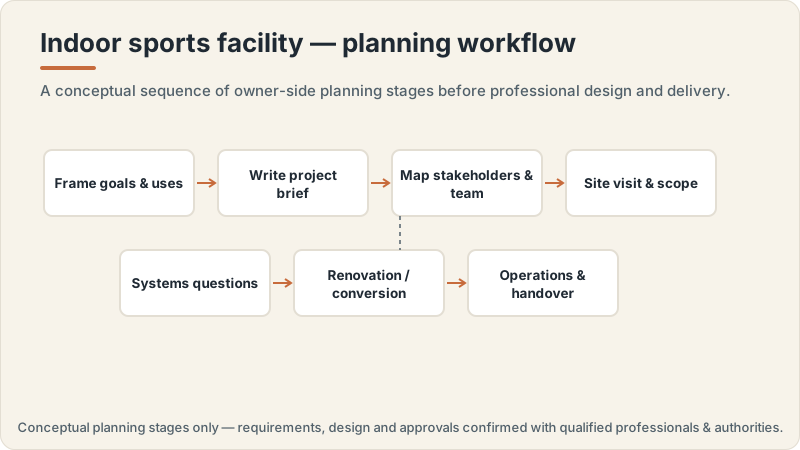
Indoor sports facility planning workflow concept
Conceptual editorial diagram — not a construction drawing, specification, to-scale plan or proof of a real project. It is not engineering, structural, fire/life-safety, crowd-safety or accessibility-compliance guidance. Capacities, dimensions, standards, requirements and costs vary by facility type, audience, site, use case and governing body, and are confirmed with qualified professionals, relevant authorities and governing bodies. Build Design Hub does not design, build, inspect, certify, recommend or match anyone.
What this guide helps you prepare
This guide helps you get organised before a professional site visit or building survey for an indoor sports facility, so the time on site is spent well. It walks through the context worth gathering in advance, the paperwork a surveyor or engineer will typically ask to see, and the questions worth having written down. The aim is a preparation aid, not an assessment method: it does not tell you how to survey a building, judge its condition, or decide whether it is suitable. Those are professional judgements, and this guide keeps you firmly on the side of preparing for them rather than making them.
Being prepared changes the nature of the visit. When you can hand over a clear statement of intended use, the plans and documents you hold, and a list of your open questions, professionals can spend their time observing and advising rather than reconstructing your project from scratch. It also helps you compare visits fairly if you are speaking with more than one professional or building. Throughout, treat every figure, requirement or constraint you hear as something to confirm in writing with the relevant qualified professional and authority, because these vary by location, facility type, use case, governing body, owner, site, authority, professional team and project scope.
- Write a short statement of intended use: which sports, activities and user groups the indoor space is meant to serve
- Assemble the documents you already hold: floor plans, title or lease information, previous reports, drawings or as-built records
- List the professionals you expect to involve and what you hope each visit will clarify
- Note your open questions and uncertainties so nothing is forgotten during a walkthrough
- Record which decisions you believe are yours as owner and which you expect to sit with professionals or authorities
- Decide how you will capture notes, photos and follow-up actions consistently across visits
Gathering context about the site or candidate building
Before anyone visits, gather what you already know about the space and its history. For a candidate building this might include existing floor plans, previous survey or condition reports, lease or ownership documents, any drawings of prior alterations, and a plain description of how the building is used today. For a bare site it might include boundary information, any available site plans, and notes on access and surroundings. You are not interpreting these documents or drawing conclusions from them; you are collecting them so a professional can review the real history rather than relying on memory or assumptions. Where records are missing, note that too, because gaps are themselves useful information for the person conducting the survey.
Alongside documents, capture the practical realities that shape an indoor facility conversation: how the space would be entered and exited, where support rooms such as changing, storage or reception might sit in relation to the main hall, how deliveries and users would arrive, and any obvious features you have questions about. Keep this descriptive and neutral. Avoid recording assumptions about what the building can hold, how many people it might accommodate, or whether it meets any requirement, because those are matters for qualified professionals and the relevant authorities to determine. Your job is to present a faithful picture of the current situation and the questions it raises.
- Collect existing plans, drawings, condition or survey reports, and lease or title documents you hold
- Note the building's current use and any previous changes of use or alterations you are aware of
- Record access points, circulation routes and how support rooms relate to the main activity space
- Describe surroundings and neighbours that could matter to an indoor facility conversation
- Flag missing records or areas you cannot access so professionals know where gaps exist
- List specific features you have questions about, phrased as questions rather than conclusions
Framing intended use and support spaces for the visit
An indoor sports facility is more than its main hall, and a productive visit depends on you describing the whole picture of intended use. Write down which activities you hope the space will host, whether it needs to switch between uses, and the supporting spaces you are considering, such as changing areas, storage, reception, first-aid or spectator space. Frame these as intentions and questions, not fixed requirements. You are not specifying sizes, layouts, clearances or capacities; you are giving professionals enough about your ambitions that they can tell you what to consider, what documentation to request, and where a specialist may be needed. The clearer your description of intended use, the more targeted the advice you receive.
It also helps to be honest about what is undecided. Perhaps you are unsure whether a single space should serve many sports or whether certain activities belong in a candidate building at all. Surface those uncertainties rather than hiding them, because the visit is the moment to have them examined by someone qualified. Keep firmly in mind that questions of what a space can safely and lawfully accommodate, how systems should perform, and which standards apply are for professionals and governing bodies to answer. Your preparation should organise the intended use and the open questions, not pre-empt the technical or compliance judgements that follow.
- List the sports and activities intended for the main space and whether it must adapt between uses
- Note the support spaces under consideration: changing, storage, reception, first-aid, spectator or office areas
- Describe user groups and how you imagine them moving through the building on a typical session
- Capture which governing bodies or associations relate to your intended activities, to confirm their guidance with them
- Record uncertainties about whether the space suits the intended use, phrased as questions for professionals
- Avoid noting any dimensions, capacities or performance figures as decided; leave these for qualified professionals
Planning questions before speaking with professionals
Before the visit, work through the questions you can answer among your own team, because settling these makes the professional conversation sharper. These are project-shaping questions rather than technical ones: what the facility is for, who decides, what documents you can supply, what your constraints and hopes are, and what a successful visit would tell you. Answering them internally reveals gaps in your own information and stops the visit being consumed by basic project description. It also helps you brief everyone attending so the professional hears one consistent account of the project rather than several competing versions.
As you prepare, separate the questions you can resolve yourselves from those that genuinely need a professional. Ownership, intended use, stakeholder priorities and available records are usually yours to establish. Anything touching structure, building systems, condition, safety, accessibility, compliance or suitability belongs with qualified professionals and the relevant authorities. Getting that split right in advance means you arrive with clear internal decisions and a focused list of professional questions, rather than expecting a surveyor to make choices that are properly the owner's, or trying to settle technical matters yourselves that are properly theirs.
- What is the facility's core purpose, and which uses are essential versus optional?
- Who in the project has authority to make decisions, and how will visit findings be reviewed?
- Which documents, plans and reports can be supplied, and which are missing?
- What would a successful visit tell us, and what open questions must it address?
- What constraints, deadlines or stakeholder expectations should the professional understand up front?
- Which questions are ours to settle internally, and which must go to qualified professionals?
Questions for qualified professionals
Prepare a written list of questions for the surveyor, architect or engineer, focused on understanding scope, condition, suitability and next steps rather than on extracting numbers you will treat as fixed. Good questions ask what a professional would need to investigate, what documentation they recommend you request, which specialists may be involved, and what the findings would mean for your project. Because requirements vary by location, facility type, use case, governing body, owner, site, authority, professional team and project scope, treat any figure, standard or constraint mentioned as something to confirm in writing for your specific situation rather than as a general rule you can carry forward.
Use the visit to clarify the process ahead as much as the space itself. Ask how a professional would document their findings, what further investigation or reports might follow, how building systems and compliance matters would be handled and by whom, and what would need confirming with the relevant authorities and governing bodies. Build Design Hub does not conduct surveys, design buildings or systems, inspect, certify, or recommend or match professionals, so these questions are for the qualified people you engage. Their answers, in writing, are what should guide your decisions.
- What would you need to investigate to assess this space for our intended use, and what falls outside this visit?
- Which documents or prior reports should we request, and who holds them?
- Which specialists (for structure, building systems, accessibility, safety or compliance) might be involved, and when?
- How will your findings be documented, and what further reports or investigations could follow?
- What would need confirming with the relevant authorities and governing bodies for our intended use?
- Which matters are decisions for us as owner, and which are professional or regulatory judgements?
What this does not replace
This is an educational planning resource only. It is not an indoor sports facility construction manual and not structural or architectural design, HVAC/ventilation, lighting or acoustic engineering, fire or life-safety, or accessibility-compliance advice, and it is not permit, zoning, inspection, certification, legal, tax, insurance or procurement advice. It does not design, build, engineer, specify, size, certify, inspect or approve anything, gives no capacities, dimensions, clearances, lux, air-change rates, acoustic or temperature thresholds, revenue, ROI or costs, and offers no warranty interpretation or estimate. Requirements, standards, capacities and costs vary by location, facility type, use case, governing body, owner, site, authority, professional team and project scope, and are confirmed with qualified professionals, relevant authorities and governing bodies.
Build Design Hub does not design, build, engineer, inspect, certify, recommend, rank, verify, introduce, broker or match suppliers, contractors, consultants or professionals, and HELPERG LLC is publisher/operator only. Use this resource to prepare your own thinking and briefs, then have the qualified professionals you engage directly — architects, structural and building-services engineers, lighting, acoustic, accessibility and fire/life-safety specialists, and legal or procurement advisors where appropriate — review your project. Decisions about design, engineering, systems, safety, accessibility, compliance, capacity, procurement and cost must rest on those professionals, the relevant authorities and the governing bodies for your sport and location.
- Not an indoor sports facility construction manual and not structural or architectural design
- Not HVAC/ventilation, lighting or acoustic engineering, fire/life-safety or accessibility-compliance advice
- Not permit/zoning, inspection, certification, warranty-interpretation, legal, tax, insurance or procurement advice
- Not a supplier, contractor, consultant or professional recommendation, ranking, directory or matching service
- Not an estimate and gives no capacity, dimension, system-performance, revenue, ROI or cost figures — requirements and costs vary
- Qualified professional review is required before any indoor sports facility project decision
Indoor facility site-visit preparation register
- 1Write a short statement of the facility's intended use, sports and user groups
- 2Gather existing floor plans, drawings and as-built records you hold
- 3Collect previous condition, survey or inspection reports available to you
- 4Assemble lease, title or ownership documents relevant to the space
- 5Record the building's current use and any known previous alterations or changes of use
- 6Note access points, circulation routes and how support rooms relate to the main space
- 7List the support spaces under consideration (changing, storage, reception, first-aid, spectator)
- 8Record which governing bodies or associations relate to your intended activities, to confirm their guidance with them directly
- 9Flag missing records, inaccessible areas and information gaps for professionals
- 10Write down your open questions and uncertainties about the space
- 11Note which decisions you believe are the owner's and which belong to professionals or authorities
- 12Prepare a written question list for each professional you expect to involve
- 13Decide how notes, photos and follow-up actions will be captured consistently
- 14Set up a place to record professional findings and confirmed-in-writing follow-ups
Common mistakes to avoid
- Writing down a dimension, capacity, clearance or lighting or air figure as if it were fixed, instead of a question to confirm with qualified professionals
- Assuming a candidate building suits the intended use before any professional has assessed it
- Treating decisions about structure, building systems, safety or accessibility as the owner's, when they belong with professionals and authorities
- Arriving without plans, prior reports or ownership documents, leaving the professional to reconstruct the project on site
- Skipping professional review and acting on a walkthrough impression or an informal verbal comment
- Assuming permit, code, zoning, accessibility or safety requirements without confirming them with the relevant authorities and governing bodies
- Hiding uncertainties about the space rather than surfacing them for professional examination
- Failing to capture what was said in writing, so figures and constraints are misremembered later
When to involve a professional
- When any question touches structure, condition or whether a building can support the intended indoor use
- When building systems such as ventilation, lighting, acoustics or temperature come up, so a relevant qualified professional advises
- When accessibility, fire and life-safety, permits, codes or zoning are involved, to confirm with professionals and the relevant authorities
- When a change of use, conversion or significant alteration of an existing building is being considered
- Before relying on any figure, requirement, standard or constraint you have heard, to have it confirmed in writing for your case
- When findings conflict, records are missing, or you are unsure which decisions are yours versus a professional's
Frequently asked questions
Questions readers ask about this topic
Does Build Design Hub survey the building, design the facility, or recommend a surveyor for me?
No. Build Design Hub is an educational resource and does not survey sites, inspect or certify buildings, design structures, or design HVAC, lighting or acoustic systems. It does not recommend, rank, verify, introduce or match surveyors, architects, engineers, suppliers or contractors, and it gives no capacities, dimensions, costs or requirements. This guide only helps you prepare for a visit with the qualified professionals you choose and engage independently.
Can this guide tell me the sizes, clearances or lighting and ventilation levels an indoor hall needs?
No. Those depend on your location, facility type, intended use, governing body, site, authority, professional team and project scope, and only qualified professionals and the relevant authorities can confirm them for your specific case. Treat any figure you encounter as a question to raise and confirm in writing, never as a general rule to carry forward.
How do I decide which questions to settle myself and which to take to a professional?
As a general guide, matters of intended use, ownership, stakeholder priorities and available records are usually yours to establish, while anything involving structure, building systems, condition, safety, accessibility, compliance or suitability belongs with qualified professionals and the relevant authorities. When you are unsure which side a question falls on, treat it as a professional question and ask.
What should I bring to a site visit or building survey?
Bring a clear statement of intended use, any plans, drawings and prior reports you hold, lease or ownership documents, notes on the building's current use and history, a list of your open questions, and a way to record what is said. Flagging missing records and inaccessible areas is just as useful as the documents you do have.
Keep reading