
Who this guide is for
- Owners and developers exploring a new or converted indoor sports facility and building an early project brief
- Sports clubs and community organisations scoping an indoor hall, gym or training space before engaging professionals
- Schools, colleges and education trusts preparing to plan a sports hall or multi-purpose indoor space
- Municipalities and public-sector teams organising stakeholder input and scope for an indoor facility
- Facility managers and operations leads planning around use patterns, support rooms and lifecycle considerations
- Project teams and coordinators assembling documentation, questions and comparison structures for professional review
Planning diagram
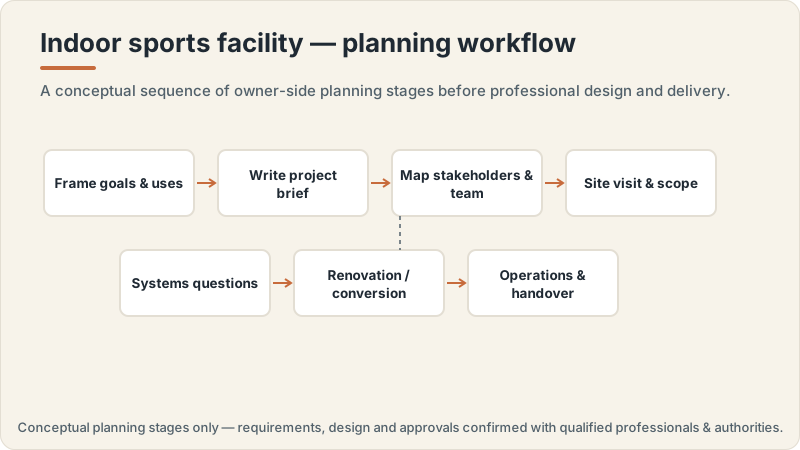
Indoor sports facility planning workflow concept
Conceptual editorial diagram — not a construction drawing, specification, to-scale plan or proof of a real project. It is not engineering, structural, fire/life-safety, crowd-safety or accessibility-compliance guidance. Capacities, dimensions, standards, requirements and costs vary by facility type, audience, site, use case and governing body, and are confirmed with qualified professionals, relevant authorities and governing bodies. Build Design Hub does not design, build, inspect, certify, recommend or match anyone.
What this guide helps you prepare
This guide helps you turn a broad ambition - 'we want an indoor sports facility' - into a structured brief that qualified professionals and authorities can respond to. It walks you through the early owner-side decisions: what activities the space should support, who will use it, how it fits your site and existing operations, and which questions you need answered before design begins. The aim is to help you capture your intentions, constraints and open questions clearly, so that later conversations are focused and the professionals you engage understand what you are trying to achieve.
It deliberately stops at the boundary of professional work. It does not tell you how large a hall should be, how many people a space can hold, how to lay out courts, or what any system must deliver, because those are decisions for appointed professionals, governing bodies and relevant authorities working with your specific site and use case. Instead, it helps you record assumptions to verify, gather the documentation you will need to share, and prepare the questions that make professional input more useful. Treat everything here as preparation, not as an answer.
- Have you written a plain-language statement of what the facility is for and who it serves?
- Have you listed the sports, activities and non-sport uses the space is intended to support?
- Have you separated confirmed facts about your site from assumptions you still need to verify?
- Have you noted which decisions you believe are yours as owner versus those that belong to professionals?
- Have you identified the governing bodies or authorities whose input may shape the project?
- Have you captured the open questions you want qualified professionals to help resolve?
Defining use, users and the activity mix
The single most useful thing an owner can prepare is a clear picture of intended use. Indoor sports facilities differ enormously depending on whether they host a single sport or many, whether they serve competition, training, recreation, education or hire, and whether spectators, events or community access are part of the vision. Before any professional can advise on layout, systems or suitability, they need to understand the activity mix, the balance between primary and secondary uses, and how those uses might change over time. Writing this down - honestly and specifically - prevents costly misunderstandings later and helps professionals ask you the right follow-up questions.
Be cautious about treating any activity-related figure as settled. How a space suits a given sport, what markings or zones different governing bodies expect, how flexible a multi-purpose room can realistically be, and how simultaneous uses interact are all matters that vary by sport, governing body, use case, site and professional judgement. Rather than deciding these yourself, record your intended uses and priorities, note where you are unsure, and flag every activity that has a recognised governing body so its guidance can be confirmed by the appropriate parties during design. Your job at this stage is to describe demand and intent, not to specify solutions.
- Which sports and activities are primary, and which are occasional or aspirational?
- Will the space serve competition, training, recreation, education, hire, events or a combination?
- Which activities have a governing body whose guidance should be confirmed by professionals?
- How might use patterns, hire demand or programming change over the facility's life?
- Are there non-sport uses (exams, assemblies, community events) that shape flexibility needs?
- Have you recorded these as intentions to confirm, rather than as fixed requirements?
Site, support spaces and operational context
An indoor sports facility is more than its main hall. Changing rooms, storage, circulation, reception, spectator areas, plant and support spaces all shape whether a facility works in daily operation, and the surrounding site, access, existing buildings and services all influence what is feasible. Preparing an honest account of your site and operational context - what exists, what constraints you are aware of, how people and vehicles will move, and how the facility connects to what you already run - gives professionals the grounding they need. Gathering site information, existing drawings, surveys and service records early, where they exist, tends to make every later conversation more productive.
Resist the urge to resolve technical or regulatory questions about the site yourself. Whether a site suits a given facility, how support spaces should relate to the main space, and how servicing, access and existing conditions affect the project are matters for qualified professionals and the relevant authorities to assess for your specific circumstances. Record what you know, note what you are unsure about, and list the surveys, investigations or documents you suspect will be needed so you can ask professionals to confirm. Framing site and operational context as questions to verify - not conclusions - keeps your preparation on solid ground.
- What support spaces (changing, storage, reception, spectator, plant) does your vision imply?
- What existing drawings, surveys, service records or site information can you gather now?
- What site constraints, access issues or existing conditions are you already aware of?
- How will the facility connect to buildings, operations or programmes you already run?
- Which site investigations or surveys might professionals need - and who would you ask to confirm?
- Have you recorded operational context as questions to verify rather than assumptions?
Planning questions before speaking with professionals
Before engaging designers, engineers or other specialists, it helps to work through the decisions that are genuinely yours to shape and the assumptions you are carrying without evidence. Owners often arrive at professional meetings with unstated expectations about size, cost, timing or what a space can do - expectations that may not survive contact with the site, the authorities or the relevant governing bodies. Surfacing those assumptions in advance, and marking each one as 'confirmed' or 'to verify', turns a vague ambition into a brief that professionals can engage with seriously and reduces the risk of surprises later.
This is also the moment to clarify scope, stakeholders and decision-making. Who needs to agree the brief? Whose approval or input is required - internally, from users, from governing bodies, from authorities? What is genuinely in and out of scope for this project? None of these questions involve technical answers you should be producing yourself; they are about organising your own side of the project so that when professionals join, they meet a client who knows what they want to achieve, what they are unsure about, and what they need help confirming.
- What outcomes must this facility achieve to be considered a success, in plain terms?
- Which assumptions about use, size, cost or timing are we carrying without confirmation?
- Who are the stakeholders, and whose input or approval does the brief depend on?
- What is clearly in scope and out of scope for this project at this stage?
- Which questions genuinely require a professional's judgement rather than an owner's decision?
- What documentation, site information and priorities can we prepare before the first meeting?
Questions for qualified professionals
When you do engage professionals, the value of your preparation shows in the quality of your questions. Rather than asking a specialist to validate a dimension or capacity you have chosen, ask them to help you understand what governs it, what applies to your site, use case and location, and what documentation would demonstrate that a proposed approach is suitable. This framing keeps the technical and regulatory decisions where they belong - with the appropriate professionals, authorities and governing bodies - while ensuring you understand the reasoning well enough to make informed owner-side choices and to compare responses on a like-for-like basis.
Ask consistently across everyone you speak with, and ask what to request in writing. The same structured questions - about scope, assumptions, applicable requirements, who confirms what, and what documentation will be provided - make it possible to compare responses fairly and to see where professionals differ in their reading of your project. Building-systems topics such as lighting, ventilation, acoustics, temperature, accessibility and safety belong entirely in this conversation: your role is to ask what the relevant professional recommends, what governs it, and what documentation to request - never to specify, size or decide these yourself.
- What requirements, standards or governing-body guidance apply to our facility type and location, and who confirms them?
- Which decisions are yours to make as professionals, and which remain ours as owner?
- What surveys, investigations or documentation would you need before advising?
- For each building system, what do you recommend, what governs it, and what documentation should we request?
- What are the main risks or uncertainties you see in what we have described so far?
- What should we request in writing so we can compare responses on a consistent basis?
What this does not replace
This is an educational planning resource only. It is not an indoor sports facility construction manual and not structural or architectural design, HVAC/ventilation, lighting or acoustic engineering, fire or life-safety, or accessibility-compliance advice, and it is not permit, zoning, inspection, certification, legal, tax, insurance or procurement advice. It does not design, build, engineer, specify, size, certify, inspect or approve anything, gives no capacities, dimensions, clearances, lux, air-change rates, acoustic or temperature thresholds, revenue, ROI or costs, and offers no warranty interpretation or estimate. Requirements, standards, capacities and costs vary by location, facility type, use case, governing body, owner, site, authority, professional team and project scope, and are confirmed with qualified professionals, relevant authorities and governing bodies.
Build Design Hub does not design, build, engineer, inspect, certify, recommend, rank, verify, introduce, broker or match suppliers, contractors, consultants or professionals, and HELPERG LLC is publisher/operator only. Use this resource to prepare your own thinking and briefs, then have the qualified professionals you engage directly — architects, structural and building-services engineers, lighting, acoustic, accessibility and fire/life-safety specialists, and legal or procurement advisors where appropriate — review your project. Decisions about design, engineering, systems, safety, accessibility, compliance, capacity, procurement and cost must rest on those professionals, the relevant authorities and the governing bodies for your sport and location.
- Not an indoor sports facility construction manual and not structural or architectural design
- Not HVAC/ventilation, lighting or acoustic engineering, fire/life-safety or accessibility-compliance advice
- Not permit/zoning, inspection, certification, warranty-interpretation, legal, tax, insurance or procurement advice
- Not a supplier, contractor, consultant or professional recommendation, ranking, directory or matching service
- Not an estimate and gives no capacity, dimension, system-performance, revenue, ROI or cost figures — requirements and costs vary
- Qualified professional review is required before any indoor sports facility project decision
Indoor sports facility planning preparation worksheet
- 1Record a plain-language statement of the facility's purpose and who it will serve
- 2List all intended sports, activities and non-sport uses, marking primary versus occasional
- 3Note which activities have a governing body whose guidance professionals should confirm
- 4Capture expected user groups and how use patterns might change over the facility's life
- 5Gather existing site information, drawings, surveys and service records where they exist
- 6List the support spaces your vision implies (changing, storage, reception, spectator, plant)
- 7Document known site constraints, access issues and existing conditions to raise with professionals
- 8Separate confirmed site and operational facts from assumptions you still need to verify
- 9Identify the stakeholders whose input or approval the brief depends on
- 10Define what is clearly in scope and out of scope at this stage
- 11Prepare the same structured questions to ask each professional consistently
- 12List the documentation and written confirmations you will request from professionals
- 13Record which authorities and governing bodies may need to be consulted, and by whom
- 14Note every open question you want qualified professionals to help resolve
Common mistakes to avoid
- Stating a hall size, court dimension, ceiling height or capacity as fixed before professionals and governing bodies confirm what applies
- Assuming a requirement, clearance or standard applies without verifying it for your specific facility type, location and use case
- Treating a lighting, ventilation, acoustic, temperature, accessibility or safety decision as the owner's to make rather than a qualified professional's
- Locking in a budget, cost or timeline as certain before any professional has reviewed the site and scope
- Deciding the activity mix and layout suits a sport without confirming the relevant governing body's guidance through professionals
- Skipping professional and authority review of site, code, permit and suitability questions and assuming an owner can resolve them
- Carrying unstated assumptions about use, demand or feasibility into professional meetings instead of surfacing and labelling them
- Asking professionals to validate a solution you have already chosen rather than asking what governs the decision and who confirms it
When to involve a professional
- When any question touches structure, mechanical, electrical, lighting, ventilation, acoustic, fire-safety, accessibility or code matters - these belong to qualified professionals and relevant authorities
- When you need to know whether a site, building or conversion is suitable for an intended indoor sports use
- When governing-body guidance, standards or requirements for a specific sport or facility type must be identified and confirmed
- When permits, zoning, approvals or authority consultations may apply and their applicability must be established
- When surveys, investigations or existing-condition assessments are needed before design or feasibility can proceed
- When comparing professional responses on technical suitability, applicable requirements or documentation, so the review itself is done by qualified specialists
Frequently asked questions
Questions readers ask about this topic
Does Build Design Hub design, build, engineer, inspect or certify indoor sports facilities?
No. Build Design Hub is an educational resource only. It does not design, build, engineer, inspect, certify, recommend, rank, verify, introduce, broker or match any suppliers, contractors, consultants or professionals. It does not design HVAC, ventilation, lighting or acoustic systems and provides no capacities, dimensions, clearances, costs or requirements. This guide helps you prepare to work with qualified professionals, who are the appropriate parties for all design, engineering, inspection and certification work.
Can this guide tell me how big my sports hall should be or how many people it can hold?
No. Dimensions, capacities, clearances, run-offs and similar figures vary by location, facility type, use case, governing body, owner, site, authority, professional team and project scope, and this guide states none of them as facts. It helps you record your intended uses and prepare questions so that qualified professionals, relevant authorities and governing bodies can confirm what actually applies to your specific project.
How should I handle lighting, ventilation, acoustics or accessibility in my planning?
Treat all of these as questions for the relevant qualified professionals, not as decisions to make yourself. This guide helps you prepare what to ask and what documentation to request - such as what governs a decision, what the professional recommends and who confirms it. It does not provide calculations, thresholds, targets, product specifications, system designs or compliance claims for any building system.
What is the best way to use this guide before engaging professionals?
Use it to organise your own side of the project: write a clear brief, define intended uses and users, gather site information, separate confirmed facts from assumptions to verify, and prepare consistent questions and documentation requests. Arriving prepared makes conversations with qualified professionals more productive - but it does not replace their review, which your project still needs.
Keep reading