
Who this guide is for
- Owners or operators planning a padel court who want to research installers before reaching out
- Clubs comparing how different installers describe their scope, coordination and responsibilities
- Homeowners adding a padel court who want a neutral framework for installer conversations
- Project sponsors who need to brief partners or a board before committing to a contractor
- Anyone preparing references, insurance and licensing questions to ask rather than assume
- Readers who want to separate what they can decide from what needs qualified professional review
Planning diagram
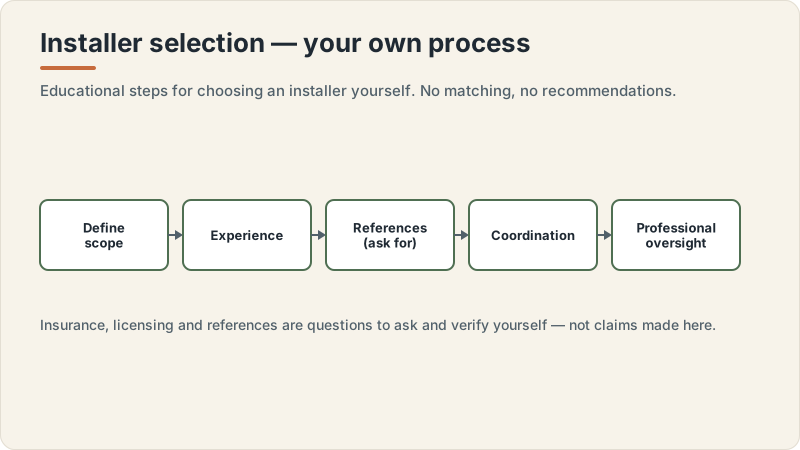
Installer selection process concept
Conceptual editorial diagram — not a construction drawing, specification or to-scale plan. Official court dimensions, standards, drainage, structure and lighting requirements vary by sport, site and location and are confirmed with the relevant federation, supplier and qualified professionals.
What this research helps you prepare
This resource helps you prepare for installer selection rather than make the decision for you. It gives you a way to clarify your own scope, write down the questions worth asking, and build a like-for-like comparison structure so that the conversations you have with different installers are easier to weigh against one another. It is designed to be filled in before you commit to anyone.
A padel court combines several trades and components, so a useful starting point is being clear about what you are asking an installer to take responsibility for. By recording what you believe is in scope, what sits with separate suppliers and what is still undecided, you give yourself a checklist of open items and avoid the common trap of assuming someone else owns a task. Costs, timelines, lead times and requirements are deliberately left as questions here, because they vary by site, scope, supplier, access, drainage, lighting, surface, shipping and local conditions, and must be confirmed directly with suppliers and qualified professionals.
- A plain statement of the scope you want an installer to own, in your own words
- A list of padel-specific coordination points between base, surface, enclosure and lighting
- A consistent set of questions to ask every installer you speak to
- A neutral comparison structure so answers can be weighed side by side
- A record of the references, documents and assurances you intend to request
Clarify padel-specific scope before you compare installers
Padel installation is unusually interlinked. The base and its tolerances affect how the glass and steel enclosure sits, the enclosure affects how lighting is mounted and aimed, and surface preparation and drainage decisions made early constrain what is possible later. Before comparing installers it helps to map, in plain language, which of these elements you expect a single installer to coordinate and which you imagine procuring or contracting separately. You are not specifying a court here; you are recording where you think the responsibility lines fall so you can test that against what each installer actually offers.
Be explicit about the open questions. Whether an installer handles the enclosure kit, the surface, the lighting and the groundworks together, or only part of that, changes how you should compare them and where coordination risk lives. Technical specifications, court layout and any sport or federation requirements vary and should be confirmed with the relevant supplier, body or qualified professional rather than assumed from a brochure.
- Which elements you expect one installer to coordinate: base, surface, enclosure, lighting, drainage
- Where you may use separate suppliers and who then owns the interfaces between them
- Whether the installer works from a kit you supply or one they procure
- Points where surface and enclosure decisions depend on each other
- Anything you are unsure about, flagged as a question rather than an assumption
Understand coordination and interface risks
Most problems on padel projects appear at the seams between trades rather than within any one of them: a base poured to the wrong tolerance for the chosen enclosure, lighting positions that clash with the glass, drainage that was assumed to be someone else's job. When you research installers, it is worth thinking about how each one describes the handovers between groundworks, enclosure erection, surfacing and lighting, and who they say is responsible when one stage depends on another.
This is research framing, not a verdict on any provider. The point is to recognise where interface risk sits for your particular scope so you can ask about it directly and compare how clearly each installer answers. How coordination is actually handled, and whether it is adequate, is something to confirm with the installer and with qualified professionals reviewing your specific project, because the right arrangement varies by site and scope.
- How sequencing between base, enclosure, surface and lighting is described
- Who is responsible when one stage's tolerances affect the next
- How variations or unexpected site conditions would be handled and recorded
- What handoff documentation you would receive at each stage
- How issues found later would be diagnosed and which party would address them
What to ask before comparing options
Comparing installers fairly means asking each of them broadly the same things and recording the answers in the same structure. Useful areas to ask about include their experience with padel specifically rather than courts in general, how they would review your particular site, what they include and exclude in their scope, how they coordinate the trades, and what assurances they can speak to. Insurance and licensing are worth raising as direct questions about what they hold and what applies in your location, never as something to assume from their presence on a list.
References are part of this conversation, and you should ask for them rather than rely on anything published. This resource does not contain, invent or vouch for any reference, review or past project; it simply prompts you to request them and to verify them yourself with qualified judgement. Treat every figure an installer gives you, on cost, timeline or lead time, as something to confirm in writing for your scope, because all of these vary by site, supplier and local conditions.
- What padel-specific experience and site review the installer would bring to your project
- Exactly what is in and out of their proposed scope, in writing
- What insurance and licensing they hold and what applies for your location, asked as a question
- Whether they can provide references for you to follow up yourself
- What warranty, documentation and handover you would receive, and on what terms
- How costs, timelines and lead times would be confirmed for your specific scope
Questions for qualified professionals
Some questions sit beyond installer selection and belong with independent qualified professionals who are not bidding for the work. These are the people who can review your site, confirm requirements that vary by location, and help you read what installers are proposing. Bringing them in early tends to make installer comparison more meaningful, because you are testing proposals against informed expectations rather than against each other in isolation.
Use the prompts below to prepare those conversations. They are deliberately framed as questions to ask, not answers to assume, and the right professionals will depend on your project, your site and local rules that must be confirmed with the relevant authorities and bodies.
- What does my site need investigated before any installer scope or sequence is fixed?
- Which permits, zoning, drainage, lighting, noise or accessibility rules apply, and who confirms them?
- Are the padel layout, enclosure and surface requirements being described correctly for my location?
- Where are the coordination and interface risks in the proposals I am comparing?
- What should appear in scope, handover and warranty documentation for a project like mine?
- At which stages would independent review or oversight add the most value?
What this does not replace
This is educational project-preparation material only. It is not a supplier or contractor recommendation, not contractor matching, not an estimate and not procurement, legal, tax, customs or engineering advice. It does not name, rank, rate, verify, endorse or introduce any installer, and it does not provide design, construction or inspection guidance. It does not tell you what your court will cost, how long it will take or what your local requirements are, because those vary by site, scope, supplier, access, drainage, lighting, surface, shipping and local conditions.
Use it to organise your own research and then confirm everything that matters with the right people: qualified installers, designers, engineers, drainage and lighting specialists, the relevant authorities, the appropriate sport bodies and legal or professional advisors where appropriate. Build Design Hub does not recommend, rank, verify, introduce or match suppliers or contractors and does not build, design, inspect, certify or estimate any project. HELPERG LLC is the publisher and operator of this resource only.
Padel installer research and comparison worksheet
- 1Write, in your own words, the scope you want a single installer to own
- 2Map the padel elements: base, surface, enclosure, lighting, drainage, and who you expect to handle each
- 3Note every interface where one stage depends on another and could become a dispute
- 4Prepare one consistent question set to ask every installer you speak to
- 5Ask each installer about their padel-specific experience and how they would review your site
- 6Ask what insurance and licensing they hold and what applies in your location, as a question not an assumption
- 7Request references to follow up yourself, and record that you must verify them with qualified judgement
- 8Ask what handoff documentation, warranty and terms you would receive at each stage
- 9Capture each installer's answers in the same comparison structure for a like-for-like view
- 10Mark every cost, timeline and lead time as a figure to confirm in writing, never assume
- 11List the points you intend to take to independent qualified professionals
- 12Review your notes for anything stated as fact that should instead be a question to confirm
Common mistakes to avoid
- Choosing an installer before defining your own scope, so no one can be compared on the same basis
- Assuming a single installer owns the base, enclosure, surface and lighting when only part may be in scope
- Treating costs, timelines or lead times an installer mentions as fixed rather than figures to confirm in writing
- Skipping the interface questions where padel projects most often go wrong
- Relying on published claims instead of asking for references and verifying them yourself
- Treating insurance or licensing as a given rather than a direct question about what is held and what applies
- Failing to record answers in a consistent structure, making comparison unreliable
- Mistaking this research resource for a recommendation, an estimate or contractor matching
When to involve a professional
- When your site needs proper investigation before any installer scope or sequence can be fixed
- When official padel, enclosure or surface requirements must be confirmed for your location rather than assumed
- When permits, zoning, drainage, lighting, noise or accessibility rules may apply and must be verified with the authority
- When you want independent help reading and comparing what installers are actually proposing
- When coordination between base, enclosure, surface and lighting raises questions beyond planning
- When any structural, drainage, electrical or contractual point moves into specialist territory
Frequently asked questions
Questions readers ask about this topic
Does this page recommend or introduce a padel court installer?
No. It is educational preparation material that helps you research and compare installers yourself. It does not name, rank, rate, verify, endorse, introduce or match any contractor. Build Design Hub does not recommend or broker installers, and HELPERG LLC is the publisher and operator of this resource only.
How do I check an installer's references and insurance?
By asking them directly and verifying the answers yourself with qualified judgement. This resource does not contain or vouch for any reference, review or project, and it treats insurance and licensing as questions to ask about what is held and what applies in your location, never as something assumed or confirmed on your behalf.
Can you tell me what padel court installation should cost or how long it takes?
No. Costs, timelines and lead times vary by site, scope, supplier, access, drainage, lighting, surface, shipping and local conditions. This resource gives you factors to ask about and prompts you to confirm any figures directly with suppliers and qualified professionals, in writing, for your specific scope.
What is special about selecting a padel installer rather than any court contractor?
Padel combines base, surface, glass and steel enclosure, lighting and drainage into one coordinated system, so the interfaces between trades matter a great deal. This page focuses your research on scope clarity and those coordination points, framed as questions to ask rather than specifications to assume.
Does Build Design Hub verify the installers I find?
No. Build Design Hub publishes educational planning resources only and does not verify, vet, rank, certify or endorse any installer or supplier. Verifying who you engage is your responsibility, supported by qualified professionals, and requirements vary by location and must be confirmed with the relevant authorities.
Keep reading