
Who this guide is for
- Prospective court owners or operators researching lighting products before approaching qualified professionals
- Club or facility planners building a structured supplier question set for lighting
- Anyone comparing lighting suppliers who wants a consistent record rather than a sales pitch
- Project leads separating product-supplier questions from electrical, structural and design questions
- Owners preparing for conversations with a qualified lighting designer or engineer
- Researchers who want to know what to confirm independently rather than accept at face value
Planning diagram
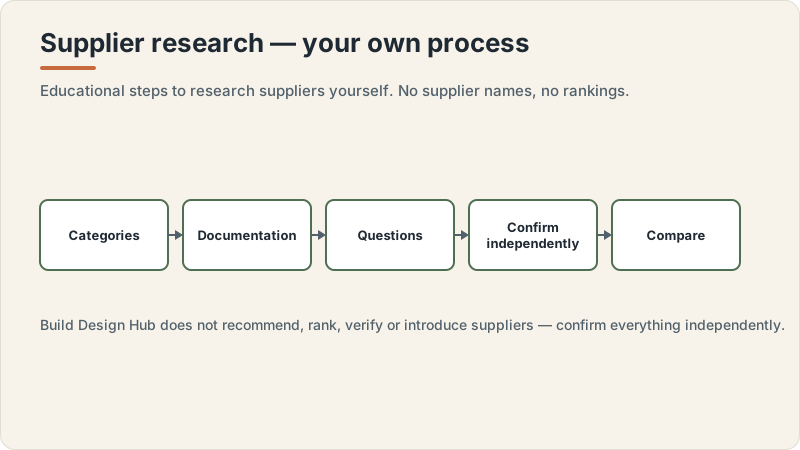
Supplier research process concept
Conceptual editorial diagram — not a construction drawing, specification or to-scale plan. Official court dimensions, standards, drainage, structure and lighting requirements vary by sport, site and location and are confirmed with the relevant federation, supplier and qualified professionals.
What this research helps you prepare
This research helps you prepare your own organised view of the lighting product supplier landscape before you commit to anyone or any product. The goal is preparation and comparison, not selection: by the end you should have a consistent set of questions, a record of each supplier's answers, and a clear list of items that still need confirmation by a qualified lighting professional, electrician or engineer.
It also helps you separate what a product supplier can reasonably speak to (their own products, documentation and stated specifications) from what they cannot decide for your court, such as how a lighting scheme should be designed for your site, what local requirements apply, or how installation should be carried out. Keeping that boundary clear protects you from treating a sales conversation as professional design or engineering advice.
Nothing here tells you which supplier or product is suitable. It gives you a framework so your own research is thorough, comparable and ready to hand to qualified professionals for review.
- A consistent question set to use with each lighting product supplier
- A structured place to record answers and supporting documentation
- A clear split between product-supplier questions and professional-design questions
- A running list of items to confirm independently for your court and location
Supplier categories to research
Lighting for a sports court can involve several different kinds of supplier, and it helps to know which category you are actually talking to before you compare anything. Some suppliers focus on the luminaires or fixtures themselves; some supply columns, brackets and mounting hardware; some bundle control gear or management systems; and some present a broader package that may overlap with electrical or installation scope handled by others.
Mapping these categories matters because a quotation or specification only covers what that supplier is responsible for. A product-only supplier may not be responsible for installation, electrical connection, structural mounting or any design decision, and a broader package may still leave gaps that fall to a separate contractor. Note for each supplier exactly what they say is in and out of their scope, and record where responsibility appears to transfer to someone else.
Do not assume that one supplier covers everything, and do not assume categories are standardised between suppliers. Capture how each one describes itself in their own words so you can compare like with like later.
- Luminaire or fixture product suppliers
- Column, bracket and mounting hardware suppliers
- Control gear, dimming or management-system suppliers
- Suppliers presenting broader packages that may overlap installation or electrical scope
- Where each supplier says responsibility passes to a separate contractor or professional
Documentation to request
Ask each supplier what documentation they can provide, and record what you actually receive rather than what was promised. Useful documentation typically includes product datasheets, any independent test or measurement reports the supplier holds, warranty terms in writing, declared conformity or compliance statements relevant to their products, and any installation or maintenance guidance they publish for their own equipment.
Treat documentation as a record of what the supplier claims, not as confirmation that a product suits your court. Independent test data, declared specifications and conformity statements still need to be reviewed by a qualified professional against the requirements that apply to your sport, location and intended use. Where a supplier references a standard or a figure, note the source and the version so a professional can check it for you.
If a supplier cannot or will not provide written documentation for something material, record that gap. The absence of documentation is itself a finding worth comparing across suppliers.
- Product datasheets and declared specifications in writing
- Any independent test or measurement reports the supplier holds
- Warranty terms, exclusions and conditions documented, not described verbally
- Declared conformity or compliance statements relevant to their products
- Published installation and maintenance guidance for their own equipment
- Documented references to any standards, including version and source
What to ask before comparing options
Before you line suppliers up against each other, ask each one the same baseline questions so your comparison is fair. The aim is a consistent record, not a verdict. Ask what is included and excluded in what they supply, what they expect a separate party to handle, what documentation backs each claim, and what they would need to know about your site before saying anything more specific.
Be especially careful with any figure a supplier offers, whether it concerns output, coverage, energy use, lifespan, cost, shipping or timing. Record it as a supplier claim tied to stated conditions, and flag it for independent confirmation. Lighting performance for a real court depends on the design, the site and how the installation is carried out, so a product figure alone does not describe what you will get on your court.
Also ask what assumptions each supplier is making. Two suppliers can quote very different things because they assume different scopes, mounting arrangements or site conditions. Surfacing those assumptions is what makes a later comparison meaningful.
- What exactly is included and excluded in what this supplier provides
- What they expect a separate contractor or professional to handle
- What documentation supports each specification or claim
- What site or project information they would need before being more specific
- What assumptions about scope, mounting or conditions sit behind their answers
- Which figures are claims tied to stated conditions versus confirmed for your court
Questions for qualified professionals
Some questions are not for a product supplier at all. A qualified lighting designer, electrician, structural engineer or other relevant professional is the right party to confirm what a scheme for your court should achieve, whether a product or arrangement suits your site and intended use, and how anything should be installed and connected safely. Use this section to prepare those conversations, not to ask a supplier to play that role.
Bring your supplier research with you when you speak to professionals. The documentation you gathered, the claimed specifications, and the gaps you flagged all give a professional concrete material to review. Ask them to tell you what still needs verifying, what local or federation requirements apply, and what they would want confirmed before any product or scope is settled.
Keep the boundary firm: a supplier describes their product, and a qualified professional evaluates whether and how it fits your project. Requirements vary by location and project, so confirm anything that matters with the relevant authority, federation, supplier and qualified professional.
- Which requirements apply to your sport, location and intended use
- Whether a claimed specification is appropriate for your specific court
- How a lighting scheme should be designed and what it should achieve
- How installation, mounting and electrical connection should be handled safely
- Which supplier claims and figures still need independent confirmation
What this does not replace
This page is an educational project-preparation resource only. It is not a supplier or contractor recommendation, not contractor matching, not an estimate, and not procurement, legal, tax, customs, engineering, design or construction advice. It does not tell you which lighting supplier or product to choose, and it does not verify, rank, rate or endorse anyone.
Build Design Hub does not recommend, rank, verify, certify, introduce or match suppliers or contractors, and does not design, build, estimate or advise on sports-court projects. HELPERG LLC is the publisher and operator only. Any specification, requirement, cost, availability or timeline mentioned by a supplier varies by location, site, scope and conditions and must be confirmed directly with that supplier and with qualified professionals.
Before making any project, legal, tax, customs, engineering, construction or procurement decision, consult qualified professionals who can review your specific court, site and circumstances. Use this resource to prepare for those conversations, not as a substitute for them.
Lighting supplier research checklist
- 1Record which supplier category each company falls into (fixtures, hardware, control gear, broader package)
- 2Note in each supplier's own words what is included and excluded in their scope
- 3Request product datasheets and declared specifications in writing
- 4Request any independent test or measurement reports the supplier holds
- 5Capture warranty terms, exclusions and conditions in documented form
- 6Log any declared conformity or compliance statements the supplier provides
- 7List every figure a supplier gives as a claim tied to stated conditions, flagged for confirmation
- 8Write down the assumptions each supplier is making about your site and scope
- 9Mark where a supplier says responsibility passes to a separate contractor or professional
- 10Record any documentation a supplier cannot or will not provide
- 11Note questions that belong to a qualified lighting designer, electrician or engineer, not the supplier
- 12Keep a single running list of items to confirm independently before any decision
Common mistakes to avoid
- Treating a supplier's product specification or figure as confirmed performance for your specific court
- Assuming one lighting supplier covers fixtures, mounting, control gear, electrical work and installation
- Accepting verbal warranty or compliance claims instead of requesting them in writing
- Comparing quotations without first surfacing the different assumptions and scopes behind them
- Asking a product supplier to make design, electrical or structural decisions that need a qualified professional
- Overlooking the gap where responsibility passes from supplier to a separate contractor
- Ignoring the absence of documentation rather than recording it as a comparison point
- Assuming any requirement, cost, availability or timeline is fixed rather than varying by site and project
When to involve a professional
- Involve a qualified lighting designer to confirm what a scheme for your court should achieve and whether a product suits your site
- Involve a qualified electrician for questions about electrical connection, control gear and safe power supply
- Involve a structural engineer where columns, mounting or loads on existing structures are in question
- Involve relevant authorities or federations to confirm which requirements apply to your sport, location and intended use
- Bring your supplier documentation and flagged figures to professionals so they can tell you what still needs verifying
- Consult qualified professionals before any procurement, construction or installation decision, since requirements and costs vary by project
Frequently asked questions
Questions readers ask about this topic
Does this page recommend a lighting supplier or product?
No. This is an educational preparation resource that gives you a question set and comparison structure to use yourself. It does not recommend, rank, rate, verify or introduce any supplier or product, and Build Design Hub does not match you with anyone.
Can I rely on the specifications a supplier gives me?
Treat them as supplier claims tied to stated conditions, not as confirmed facts for your court. A qualified lighting professional should review any specification, figure or requirement against your specific site, sport and intended use before you rely on it.
Why are no lighting figures or costs included here?
Because they vary by site, scope, supplier, access, surface, shipping and local conditions, and stating invented figures would be misleading. Ask suppliers what factors drive their figures and confirm anything material with qualified professionals.
What belongs to a professional rather than a supplier?
Design of a lighting scheme, confirmation that a product suits your court, applicable local or federation requirements, and how installation and electrical connection should be handled safely all belong to qualified professionals, not to a product supplier.
Is this procurement or engineering advice?
No. It is project-preparation research only and is not procurement, legal, tax, customs, engineering, design or construction advice. HELPERG LLC is publisher and operator only. Consult qualified professionals before any decision.
Keep reading